
Restaurant Food Safety Software

Turn restaurant food safety software interest into reviewed source evidence your team can govern.

MenuInformatics helps compliance, food safety, culinary, operations, support, product, data, franchise, legal, IT, and executive teams scope food safety software around source evidence, ingredient and allergen cues, caution boundaries, exception queues, review states, support handoff, reports, exports, APIs, governance, and subscription follow-up.

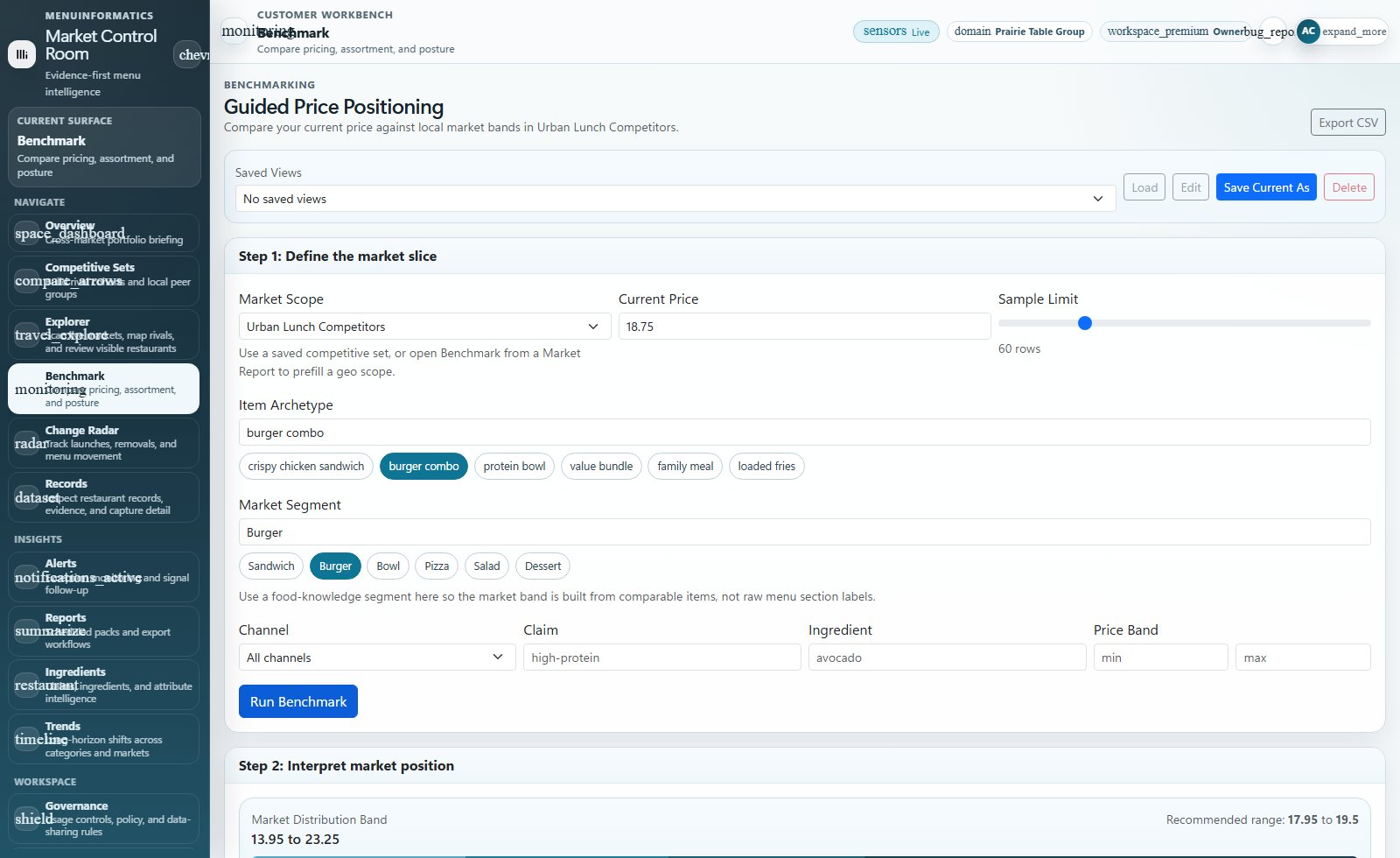
MenuInformatics restaurant food safety software preview
Food Safety Software Readiness Path

Food safety software works when reviewers can see source evidence, caveats, exception states, and downstream handoff together.

Food-safety workflows without evidence and caution boundaries create operational risk. The subscription review names the first workflow decision, the source evidence reviewers need, the buyer-owned food safety and recipe assumptions that apply, and the handoff that receives approved or blocked work.

Buyer question: Which restaurant food safety software workflow needs proof first, and what evidence or caution boundary must be visible before the team relies on it?
Food safety software outcome: A scoped workflow with source evidence, exception routing, review states, manual verification boundaries, governance, reports, exports, APIs, and subscription follow-up attached.
Food Safety Software Scope

Start restaurant food safety software with evidence, review ownership, and buyer-owned safety rules named.

Restaurant food safety software should make source evidence, menu items, ingredient statements, allergen cues, operational caveats, review states, and buyer-owned safety rules visible before a workflow supports compliance, support, product, dataset, API, or report delivery.

  • Compliance, food safety, culinary, operations, support, product, data, franchise, legal, IT, and executive owners agree which food-safety workflow needs proof first.
  • Menu items, ingredients, allergens, dietary cues, modifier language, location exceptions, channel variants, source pages, review roles, and safety caveats are separated before workflow rules are applied.
  • Buyer-owned food-safety interpretation, recipe truth, kitchen controls, legal language, and customer-facing guidance stay separate from MenuInformatics source-backed market evidence.
Source Evidence And Safety Review

Connect food-safety workflow requests to source evidence, caveats, and manual verification rules.

Food-safety workflow review becomes useful when teams can see why a signal exists, where it was observed, which locations and channels are affected, what caveats apply, and which buyer rules must travel downstream.

  • Reviewers compare safety workflow requests with source links, menu snapshots, observed dates, confidence, extraction notes, affected locations, affected channels, and menu-change context.
  • Caution boundaries name non-authoritative fields, manual verification expectations, buyer-owned recipe truth, cross-contact caveats, excluded uses, support language, and escalation paths.
  • Approved work routes into allergen management software, menu compliance software, product workflows, support workflows, reports, exports, APIs, datasets, and MICT follow-up with evidence and caveats intact.
Workflow And Exception Routing

Route missing, stale, location-specific, or buyer-owned food-safety signals into review queues.

The first food-safety software workflow should preserve what is approved, blocked, unknown, expired, location-specific, channel-specific, buyer-owned, or manual-review-only before teams rely on automation.

  • Exception queues preserve source hierarchy, confidence, null handling, stale-source caveats, manual-review states, affected markets, and downstream ownership.
  • Workflow lanes connect food safety software, allergen management software, menu compliance software, ingredient data, nutrition data, dietary data, menu workflow software, menu API, menu dataset, and data API paths.
  • Ambiguous, missing, stale, buyer-owned, location-specific, and channel-specific food-safety signals remain visible in review queues instead of being silently published.
Food Safety Governance

Turn restaurant food safety software interest into audit history, exception queues, and subscription handoff.

A subscription rollout should define who reviews each food-safety workflow decision, when evidence expires, what manual checks remain required, which caveats are retained, and what operational handoff receives the final decision before recurring rollout begins.

  • Review states, reviewer roles, escalation paths, expiration windows, audit history, evidence retention, stale-data handling, exception queues, reporting cadence, exports, API access, support paths, and MICT follow-up are named.
  • Allowed automation, human review, buyer-owned food-safety rules, source caveats, unknown values, manual review requirements, and customer-facing caution language are visible before recurring workflows start.
  • MICT receives the subscription signup, recommended proof path, opening question, lead brief, follow-up owner, food-safety-boundary concerns, and next action.
Food Safety Software Outcomes

Food safety software review turns safety-signal interest into a specific subscription scope.

Evidence-Led Safety Scope

Name menu items, ingredients, allergen cues, dietary notes, source hierarchy, confidence, caveats, affected locations, affected channels, and manual-review states before rollout.

Exception And Review Queues

Keep missing, stale, location-specific, channel-specific, buyer-owned, blocked, expired, and manual-review-only safety signals visible for the responsible owners.

Governed Handoff

Attach review owners, audit history, support language, reports, exports, APIs, datasets, and follow-up paths without presenting source-backed signals as certified food-safety advice.

Use the first food safety software review to choose evidence, exception, caution, and handoff rules.

The subscription setup should preserve target markets, item and modifier scope, source evidence, buyer-owned recipe and food-safety assumptions, manual verification boundaries, review states, support paths, reporting cadence, license limits, and commercial ownership before food-safety workflows recur.