
Restaurant Dietary Data

Scope restaurant dietary data before claims, tags, and source evidence power workflows.

MenuInformatics dietary data review helps restaurant groups, product teams, compliance teams, data teams, support teams, and operators validate dietary claims, ingredient context, allergen-adjacent cues, source evidence, freshness cadence, delivery format, and caution boundaries before dietary data becomes production work.

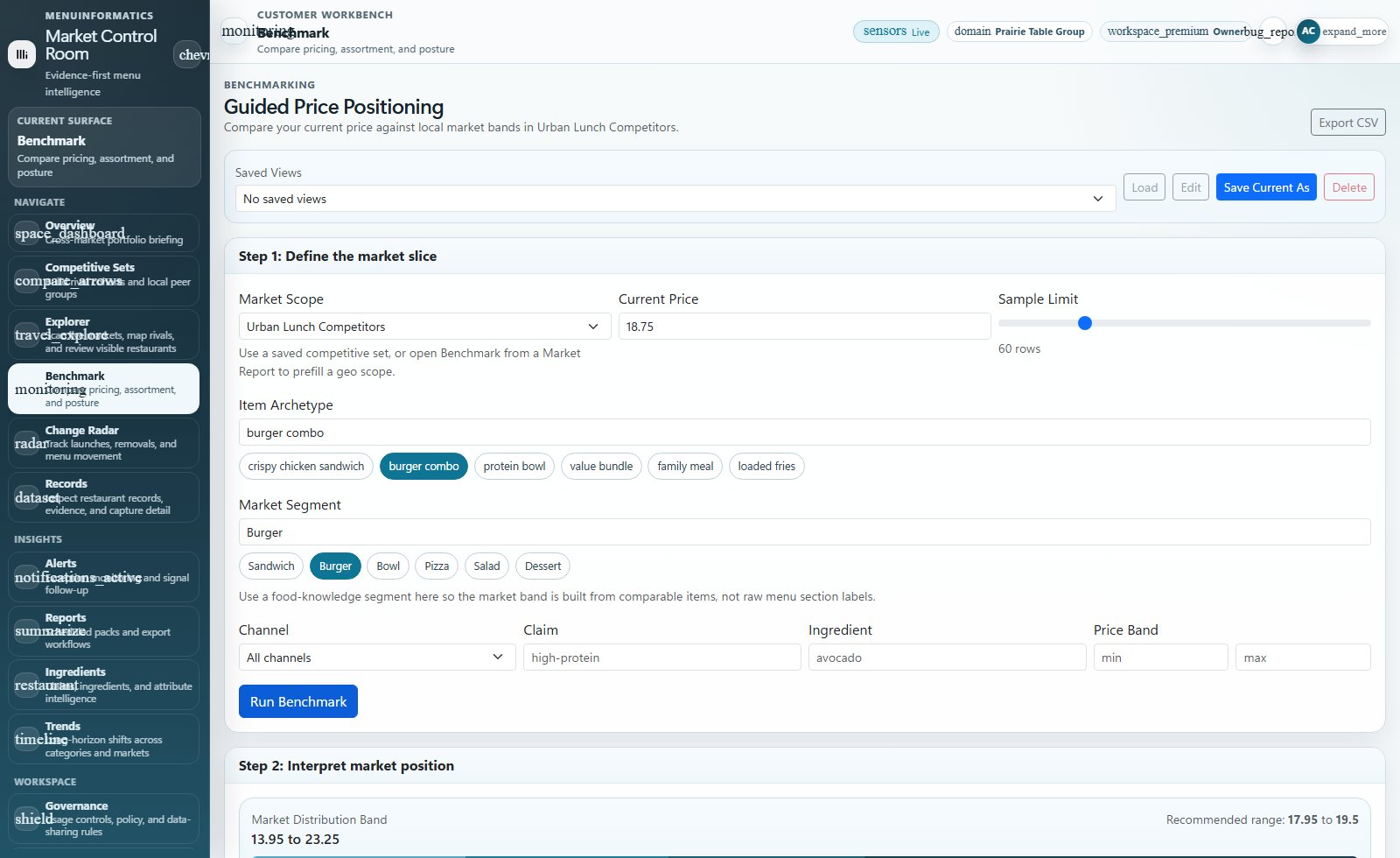
MenuInformatics dietary and menu evidence workspace preview
Dietary Data Readiness Path

Dietary claims need coverage, taxonomy, source evidence, and caution boundaries before teams act on them.

Dietary-data buyers need to know which menus expose usable claim language, how tags and synonyms are mapped, what evidence supports each record, and where manual verification boundaries apply before the data supports product, compliance, analytics, search, or reporting work.

Buyer question: Can this restaurant dietary data support product, market, compliance, support, or reporting workflows without hidden coverage, taxonomy, evidence, or caution-boundary risk?
Dietary data outcome: A scoped dietary data review with coverage, claim mapping, source evidence, verification boundaries, governance, and subscription handoff attached.
Dietary Coverage Scope

Confirm the diets, claims, menus, and evidence your review needs.

Restaurant dietary data buyers should know whether vegan, vegetarian, gluten-free, dairy-free, halal, kosher, keto, plant-based, spicy, low-calorie, and buyer-defined claim language is available before dietary signals support product, analytics, search, or reporting workflows.

  • Priority markets, restaurants, menu categories, item claims, dietary language, ingredient context, allergen-adjacent cues, and evidence sources named before dietary data scope is approved.
  • Menu item, modifier, category, claim, tag, source URL, evidence timestamp, confidence, and freshness fields reviewed against the consuming workflow.
  • Coverage gaps and non-authoritative boundaries are separated from delivery work so the first subscription dietary dataset has a defensible scope.
Dietary Claim Mapping

Map menu claims to the taxonomy your product and analytics teams use.

Dietary data becomes useful when claim names, synonyms, source hierarchy, item identity, modifier context, confidence, and excluded meanings are mapped before teams expose or consume the signals.

  • Dietary claim taxonomy, synonyms, localized wording, modifier context, ingredient cues, confidence fields, source hierarchy, and null handling mapped to buyer terminology.
  • Search filters, personalization, product catalog, market reporting, menu analysis, and API consumers reviewed before automation.
  • Mapping questions stay attached to subscription setup instead of becoming hidden onboarding work.
Source Caution And Evidence

Treat dietary tags as source-backed evidence, not certified dietary guidance.

Restaurant teams can review dietary claims, ingredient context, allergen-adjacent signals, and source language while preserving evidence, confidence, manual verification expectations, and customer-facing caution boundaries.

  • Dietary claims, ingredient context, allergen-adjacent cues, source pages, evidence timestamps, confidence levels, and extraction notes reviewed together.
  • Manual verification, non-authoritative caution language, excluded use cases, and customer-facing disclaimer boundaries defined before workflows rely on the data.
  • Caution boundaries route into dataset, API, report, or workspace handoff without implying medical, dietary, food-safety, or regulatory certification.
Delivery Governance And Review

Align dietary data delivery, evidence retention, audit, and support before activation.

Governed dietary-data buyers need delivery format, cadence, owners, source evidence, caution language, license boundaries, exception handling, support paths, and commercial handoff before the data becomes operational.

  • Security, procurement, product, compliance, analytics, legal, support, and operator owners identified before rollout review.
  • Snapshot, recurring file, API, report, retention, retry, exception, evidence, source-disclaimer, and support expectations reviewed together.
  • Subscription handoff preserves governance questions beside coverage, claim mapping, caution boundaries, delivery cadence, and license scope.
Dietary Data Outcomes

Dietary data review turns menu-claim interest into a specific subscription scope.

Dietary Coverage Fit

Know whether priority restaurants, categories, menu items, dietary claims, ingredient context, source evidence, caution text, and freshness signals are ready for dataset, API, report, or workspace use.

Mapped Claim Semantics

Confirm item identity, dietary taxonomy, confidence, synonyms, source hierarchy, null handling, excluded meanings, and manual verification boundaries before teams depend on the feed.

Governed Evidence Handoff

Turn dietary data interest into a subscription scope with delivery format, cadence, owners, source disclaimers, license limits, exceptions, and next actions attached.

Use the first dietary data review to decide what should be dataset, API, report, or workspace evidence.

The subscription setup should preserve target markets, dietary taxonomy, source evidence, manual verification boundaries, freshness cadence, caution language, license limits, support paths, and commercial ownership before dietary data access becomes operational.