
Menu Analysis

Turn restaurant menu analysis into pricing, assortment, and offer decisions.

MenuInformatics menu analysis connects category structure, item depth, modifier strategy, claims, dietary positioning, source evidence, and change handoff so restaurant teams can decide what to keep, change, promote, or monitor next.

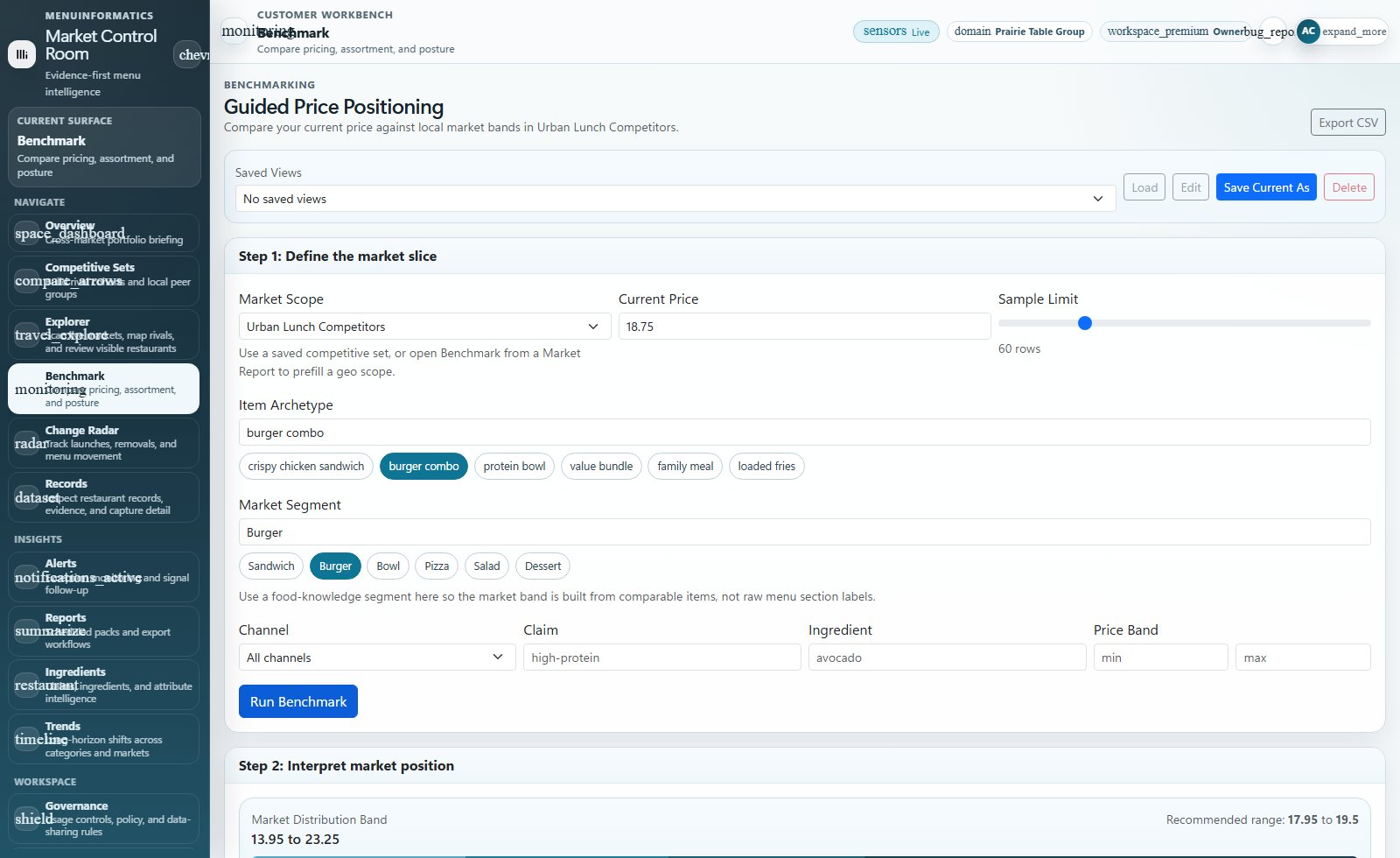
MenuInformatics menu benchmark workspace preview
Menu Review Path

Menu analysis should explain why a category, item, claim, or modifier deserves action.

A useful review names the menus, categories, competitor set, evidence freshness, report cadence, and owners before a team starts changing assortment or reacting to competitor movement.

Buyer question: Which menu structure, claim, price, or offer changes should we act on first?
Menu analysis outcome: A scoped menu review with category, item, claim, and handoff paths ready for a subscription rollout.
Category Structure

See whether the menu architecture supports the market decision.

Start with the categories, dayparts, bundles, and anchor items that define how guests and competitors frame the menu.

  • Priority categories, dayparts, anchor items, and competitor comparisons named before analysis starts.
  • Menu sections reviewed beside price position, offer pressure, and current source evidence.
  • Subscription handoff identifies whether the first output is a saved view, report, or benchmark review.
Item And Modifier Depth

Understand item, size, modifier, and bundle depth before adding more complexity.

Operators need to know where menu depth helps the guest and where it creates noise for stores, pricing, or reporting.

  • Item counts, size ladders, modifiers, combos, and add-ons reviewed against market peers.
  • Overlapping items, missing price context, and evidence gaps separated from real assortment strategy.
  • Review output can flow into Benchmark, Change Radar, or report cadence without rebuilding the scope.
Claim And Dietary Signals

Track claims, dietary positioning, and menu language where they shape buyer choice.

Menu analysis should capture more than prices. Claims, dietary cues, ingredients, and positioning often explain why a menu move matters.

  • Vegetarian, vegan, gluten-aware, protein, ingredient, and claim language reviewed beside menu structure.
  • Whitespace and competitor positioning separated from unverified or ambiguous source language.
  • Commercial follow-up preserves the claims, categories, and markets the buyer wants in the first subscription setup.
Menu Change Handoff

Turn menu analysis into a repeatable change-review workflow.

The useful output is not a static audit. It is a review path with owners, cadence, evidence requirements, and next actions.

  • Owners, cadence, thresholds, approval expectations, exports, and governance needs named before rollout.
  • Menu analysis evidence feeds change radar, scheduled reports, and support handoff consistently.
  • Enterprise and procurement context stays attached to paid workspace signup.
Menu Analysis Outcomes

Menu analysis becomes useful when it carries evidence into the next operator decision.

Assortment Context

Show which categories, items, modifiers, claims, and bundles define the competitive menu picture.

Decision-Ready Evidence

Keep menu structure, price position, offer pressure, source evidence, and freshness in the same review path.

Reusable Handoff

Turn the first menu analysis scope into benchmarks, change-radar review, reports, and operator follow-up.

Use the first review to decide which menu questions deserve a subscription rollout.

The subscription setup should define target categories, item depth, modifier structure, claim signals, review owners, source evidence, and reporting cadence before menu analysis becomes recurring work.