
Competitive Intelligence

Turn competitor monitoring into a repeatable restaurant operating workflow.

MenuInformatics competitive intelligence connects competitor sets, menu price benchmarks, change radar, source evidence, and recurring reports so restaurant teams can decide what changed and what to do next.

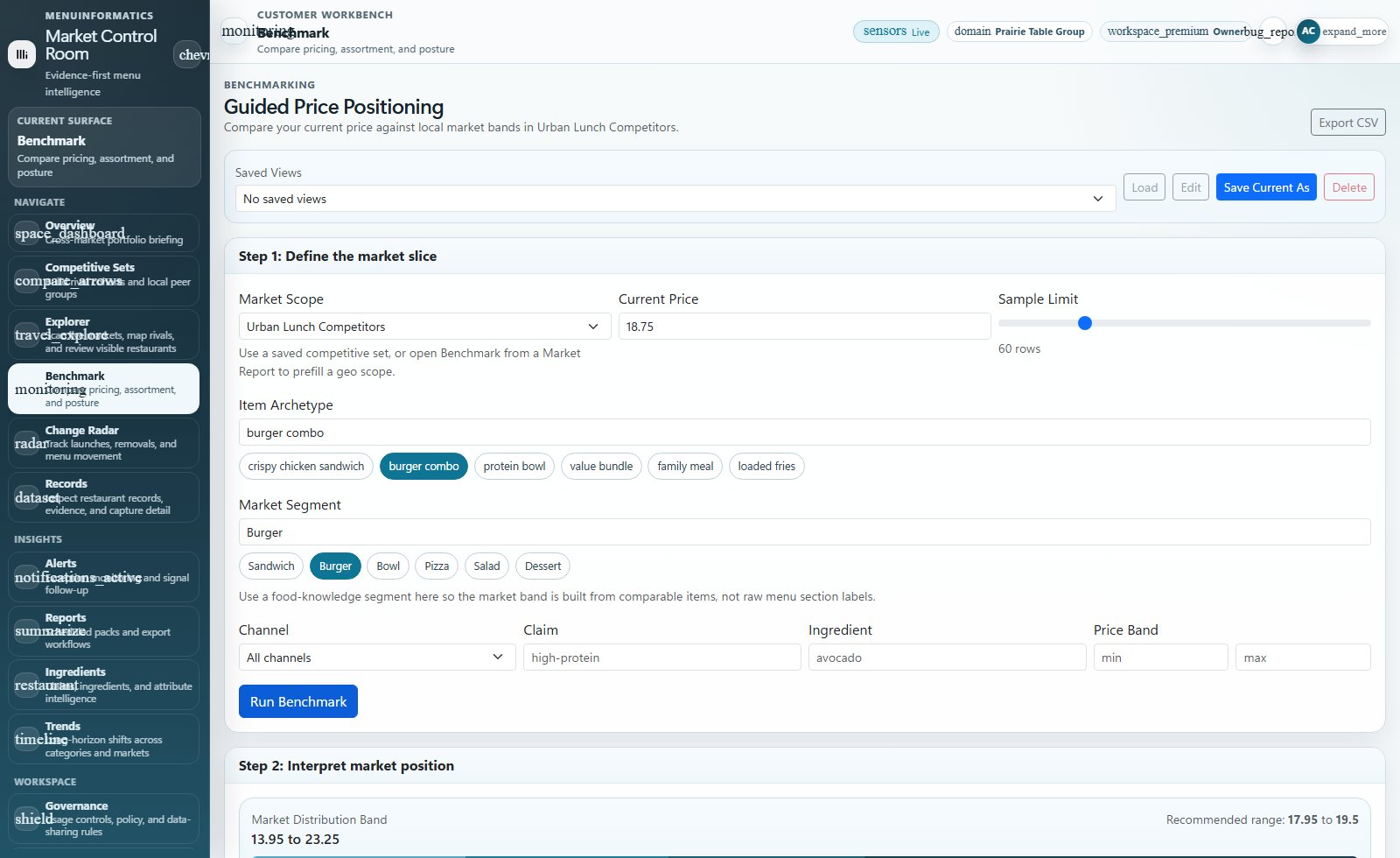
MenuInformatics benchmark workspace preview
Buyer Review Path

Competitive intelligence starts with the decision, then carries the same evidence into every follow-up view.

The subscription setup should name target markets, competitors, categories, source requirements, and review owners before teams start interpreting price movement or preparing reports.

Buyer question: Which competitor moves matter enough for pricing, menu, offer, or franchise action?
Review outcome: A competitor set, benchmark path, change queue, and reporting handoff ready for a subscription rollout.
Competitor Set Design

Define who belongs in the market view before the team starts comparing prices.

Competitive intelligence is only useful when the direct alternatives, substitutes, chains, and local operators are scoped for the actual decision.

  • Priority locations, trade areas, local competitors, and chain substitutes named up front.
  • Saved competitor sets linked into Benchmark, Change Radar, and scheduled reports.
  • Evidence gaps separated from real competitor behavior before the subscription scope is locked.
Price Benchmarking

Show price position by category, item, market, and source evidence.

Operators need benchmark evidence that explains the market context, not a detached list of scraped prices.

  • Anchor items, modifiers, bundles, and price evidence reviewed beside the competitor set.
  • Price position summarized for operators, finance, franchise, and category owners.
  • Subscription handoff identifies whether the first deliverable is a benchmark, report, or workspace view.
Change Radar

Turn competitor movement into an operating queue instead of a manual check.

Menu, price, offer, and claim movement should become a review workflow with owners and deadlines.

  • Recent menu, price, offer, availability, and claim movement grouped by market.
  • Source freshness and confidence visible beside each competitive signal.
  • Follow-up actions route into alerts, reports, support handoff, or workspace onboarding.
Reporting Handoff

Package competitive intelligence for the people who have to act on it.

A useful competitive workflow ends with the report cadence, owner, evidence policy, and next decision.

  • Executive, franchise, pricing, and operations audiences mapped to report outputs.
  • Export, API, SSO, taxonomy, and governance expectations captured before rollout.
  • Commercial follow-up keeps source, campaign, buyer segment, and signup signal attribution.
Competitive Workflow

One evidence base should support the three workflows restaurant teams ask for first.

Benchmark

Compare price position and category structure against the competitor set the buyer actually wants to monitor.

Change Radar

Track movement in menus, prices, claims, offers, and availability without waiting for a manual market check.

Reports

Package the same evidence into recurring operator, franchise, finance, or executive reporting handoffs.

Use the first review to decide which competitive workflow deserves the subscription rollout.

A scoped review turns a broad competitive-intelligence request into a specific competitor set, benchmark, change-radar queue, or reporting handoff with evidence and owners named up front.