
Restaurant Menu Trends

Scope restaurant menu trends before the first report becomes a guess.

MenuInformatics menu trends review helps pricing teams, marketing teams, culinary teams, franchise teams, analytics teams, and operators validate category movement, cuisine shifts, item launches, price and offer drivers, source evidence, freshness windows, and reporting governance before trend insights become recurring work.

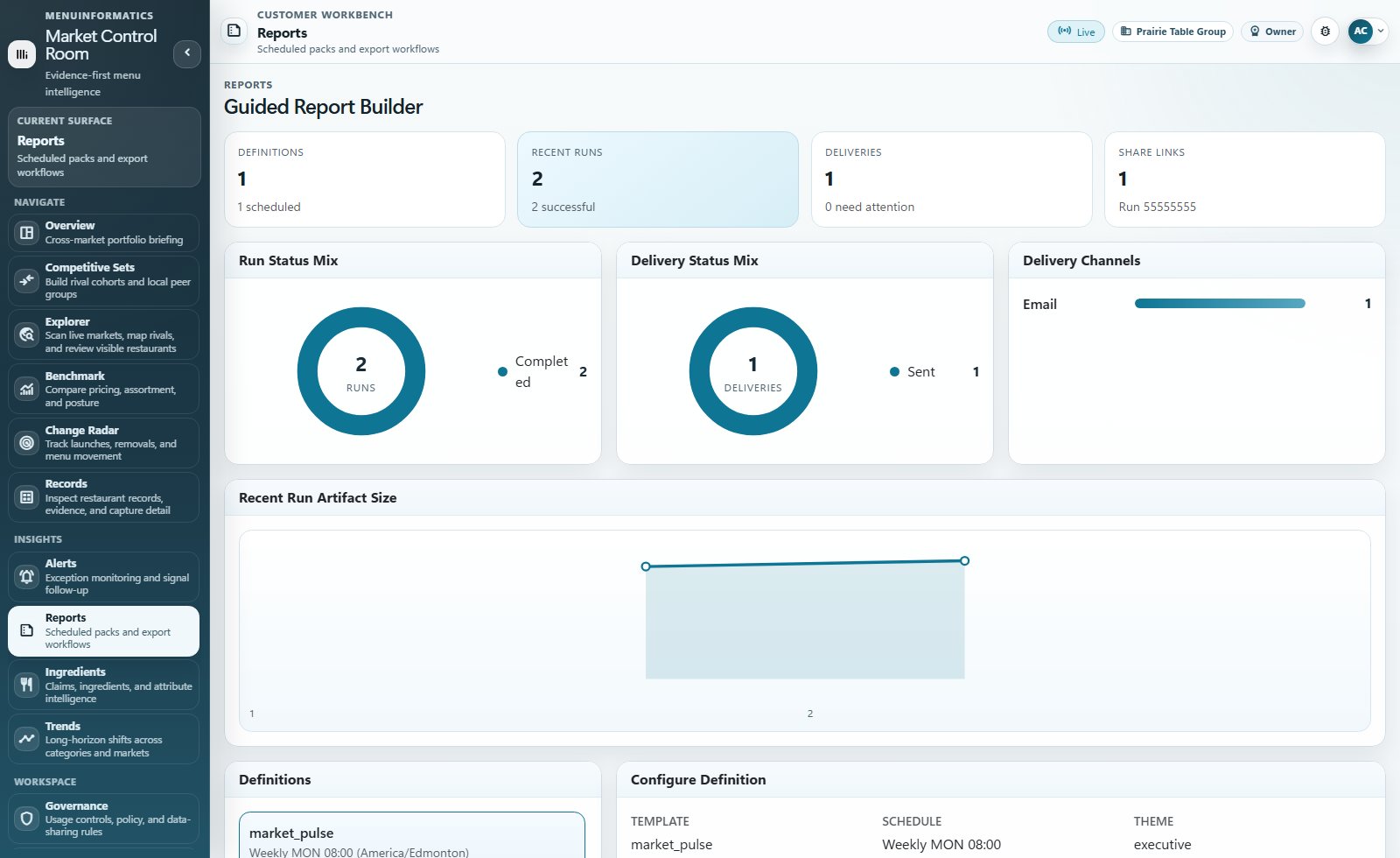
MenuInformatics restaurant menu trend report preview
Menu Trends Readiness Path

Trend reporting needs evidence, windows, and owner context before it becomes a decision surface.

Menu trend buyers need to know which competitors moved, what category or cuisine signal changed, whether pricing or promotions explain the movement, which source produced the evidence, and how often a trend should turn into a report, alert, API handoff, or workspace workflow.

Buyer question: Can these restaurant menu trends explain category movement, cuisine shifts, item launches, price and offer drivers, and source confidence without creating unsupported market stories?
Menu trends outcome: A scoped menu trends review with signal definitions, trend windows, source evidence, driver context, reporting cadence, governance, and subscription handoff attached.
Trend Signal Scope

Decide which menu trend signals are useful enough to monitor.

Restaurant menu trends are only useful when the buyer knows which competitors, categories, locations, sources, timestamps, and evidence fields support each signal before the first report or alert is trusted.

  • Priority markets, competitors, categories, cuisine cues, menu items, sources, and evidence timestamps named before trend reporting starts.
  • Trend windows, minimum evidence thresholds, source hierarchy, freshness expectations, and noisy-signal caveats reviewed before rollout.
  • The first subscription setup separates useful menu trend movement from raw scrape volume or anecdotal market observations.
Category And Cuisine Movement

Track category, cuisine, ingredient, and offer movement before teams rewrite the story.

Category and cuisine trends should connect item launches, removals, claim language, ingredient signals, modifiers, offer framing, and competitor sets so operators can see what is changing and why it matters.

  • Category, cuisine, ingredient, claim, modifier, and limited-time-offer signals mapped to buyer terminology before the report is scoped.
  • Launch, removal, rename, menu placement, availability, and offer-context changes reviewed beside trend direction.
  • Trend narratives stay tied to evidence pages, timestamps, source quality, and buyer action instead of unsupported summary copy.
Price Offer And Availability Drivers

Explain whether trends are driven by pricing, promotions, availability, or menu mix.

Teams need to know whether a trend is a real menu movement, a price move, a promotion cycle, a delivery-channel artifact, an availability gap, or a source change before they act on it.

  • Price movement, bundle framing, promotions, limited-time language, daypart availability, delivery-channel differences, and source conflicts reviewed together.
  • Trend drivers are linked to menu-change, promotion-data, price-data, and price-monitoring handoffs before recurring reporting starts.
  • False positives, stale evidence, marketplace-only movement, and manual-review paths are named before trend insights become workflow triggers.
Reporting Cadence And Governance

Turn menu trend interest into a repeatable report, alert, or API handoff.

Menu trends become operational when cadence, output format, owners, evidence retention, caveats, support paths, and follow-up workflows are clear before the subscription rollout.

  • Pricing, marketing, culinary, franchise, digital, analytics, operations, and executive owners identified before trend delivery is approved.
  • Saved view, scheduled report, API feed, change-radar, benchmark, support, and export expectations reviewed together.
  • Subscription handoff preserves trend windows, evidence retention, source caveats, licensing, report cadence, and next actions.
Menu Trends Outcomes

Menu trends review turns market interest into a specific subscription scope.

Evidence-Backed Trend Scope

Know which menu trend signals are supported by source evidence, timestamps, markets, competitor sets, and freshness expectations before the subscription starts.

Actionable Movement Narrative

Separate category movement, cuisine shifts, item launches, price changes, offer pressure, and availability artifacts so teams know what deserves action.

Repeatable Trend Delivery

Turn menu trend interest into report, alert, API, saved-view, and governance workflows with owners and caveats attached.

Use the first menu trends review to decide which market movements deserve recurring delivery.

The subscription setup should preserve target markets, competitor sets, trend windows, category and cuisine taxonomy, item-change semantics, price and offer drivers, source pages, freshness expectations, reporting cadence, owner responsibilities, support paths, and commercial boundaries before menu trends become a board deck, API feed, report, alert, or workspace queue.