
Restaurant Menu Forecasting

Scope restaurant menu forecasting before planning decisions become guesswork.

MenuInformatics menu forecasting review helps culinary teams, pricing teams, marketing teams, franchise teams, finance teams, analytics teams, and operators connect menu trends, menu changes, pricing, promotions, delivery availability, source evidence, and planning governance before forecasts influence the next menu plan.

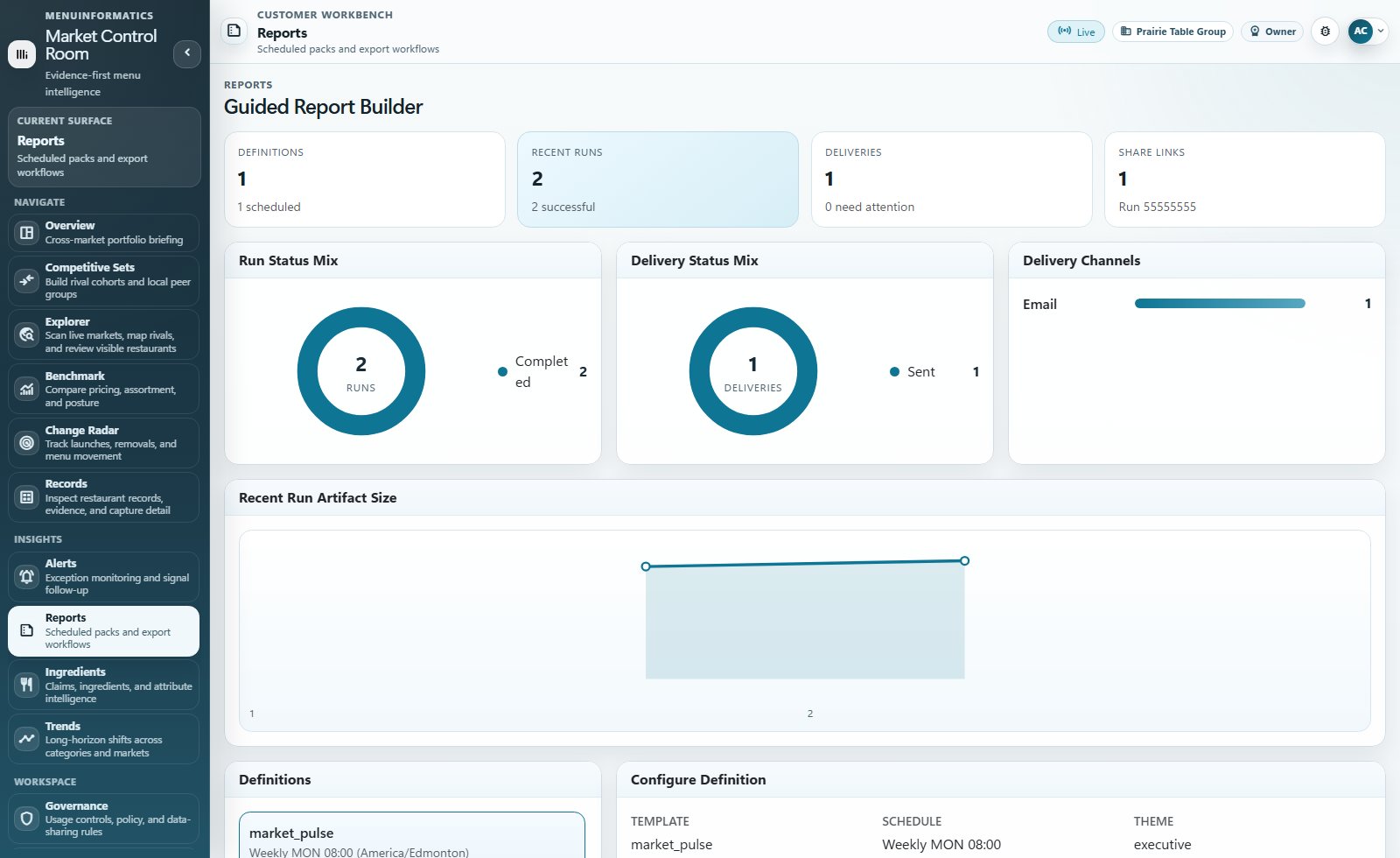
MenuInformatics restaurant menu forecasting report preview
Forecast Readiness Path

Forecasting needs evidence, assumptions, scenarios, and owners before it becomes a planning surface.

Menu forecasting buyers need to know which competitors moved, what menu or offer signal changed, how pricing and promotions explain that movement, which assumptions are safe to use, and where the output should become a report, alert, API feed, saved view, or operator handoff.

Buyer question: Can these restaurant menu forecasting signals support planning scenarios without hiding source quality, evidence windows, or uncertainty?
Menu forecasting outcome: A scoped forecasting review with decision questions, forecast inputs, scenario assumptions, evidence windows, owner workflow, reporting cadence, and subscription handoff attached.
Forecast Scope

Decide which menu planning questions deserve a forecast.

Restaurant menu forecasting should start with the decisions the buyer needs to make, the markets they care about, the products they can change, and the evidence windows that make the forecast credible.

  • Priority markets, competitor sets, menu categories, price tiers, dayparts, and product decisions named before forecast outputs are scoped.
  • Forecast windows, source evidence, refresh cadence, known gaps, and confidence thresholds reviewed before teams use the result in planning.
  • The first subscription setup separates useful menu planning signals from unsupported demand, trend, or product-roadmap assumptions.
Demand And Mix Signals

Connect category, cuisine, item, modifier, and offer movement to planning signals.

Forecasting work needs menu trend, menu change, promotion, delivery, and price movement context so teams can see whether the signal is product demand, offer pressure, availability, or source noise.

  • Category movement, cuisine shifts, item launches, removals, modifiers, limited-time offers, bundles, and delivery-channel differences reviewed together.
  • Price, promotion, menu-change, and menu-trend handoffs are connected before a forecast becomes an operating recommendation.
  • Forecast inputs preserve source pages, timestamps, market coverage, excluded signals, and caveats instead of hiding uncertainty.
Scenario Planning

Use forecast review to compare menu, price, and promotion scenarios before rollout.

Operators should be able to compare the implications of menu additions, removals, price moves, bundle changes, campaign timing, and competitor pressure before a plan turns into store execution.

  • Scenario assumptions, forecast horizon, comparable markets, competitor behavior, price bands, promotion timing, and menu-mix guardrails reviewed before recommendations are shared.
  • Planning outputs link back to menu trends, menu change data, price monitoring, promotion data, market reports, and sample-report handoffs.
  • The subscription setup identifies where a forecast should drive a decision, where it should create an alert, and where it should stay as an evidence-backed caveat.
Planning Governance

Turn menu forecasting interest into a governed planning workflow.

Forecasting becomes useful when owners, cadence, review gates, evidence retention, data delivery, caveats, support paths, and commercial boundaries are clear before recurring delivery starts.

  • Culinary, pricing, marketing, franchise, operations, finance, analytics, and executive owners identified before forecast delivery is approved.
  • Saved views, scheduled reports, API feeds, benchmark reviews, change-radar triggers, exports, and support workflows reviewed together.
  • Subscription handoff preserves forecast scope, assumptions, evidence windows, source caveats, refresh expectations, licensing, and next actions.
Menu Forecasting Outcomes

Menu forecasting review turns planning interest into a specific subscription scope.

Scoped Forecast Inputs

Know which markets, competitors, categories, prices, offers, changes, and trend windows support the forecasting review before planning work starts.

Scenario-Ready Evidence

Compare menu, pricing, promotion, and competitor scenarios with source evidence and caveats attached instead of relying on summary claims.

Governed Planning Handoff

Turn forecast interest into report, API, saved-view, alert, and owner workflows with assumptions and support paths documented.

Use the first menu forecasting review to decide which planning scenarios deserve recurring delivery.

The subscription setup should preserve target markets, competitor sets, forecast windows, scenario assumptions, price and offer drivers, source pages, freshness expectations, evidence caveats, reporting cadence, owner responsibilities, support paths, and commercial boundaries before forecasting becomes a deck, API feed, report, alert, or workspace queue.