
Restaurant Menu Change Data

Scope restaurant menu change data before alerts create busywork.

MenuInformatics menu change data review helps pricing teams, culinary teams, marketing teams, digital teams, analytics teams, restaurant groups, and operators validate item launches, removals, renames, category movement, price and offer context, source evidence, freshness cadence, and governance expectations before change data becomes production work.

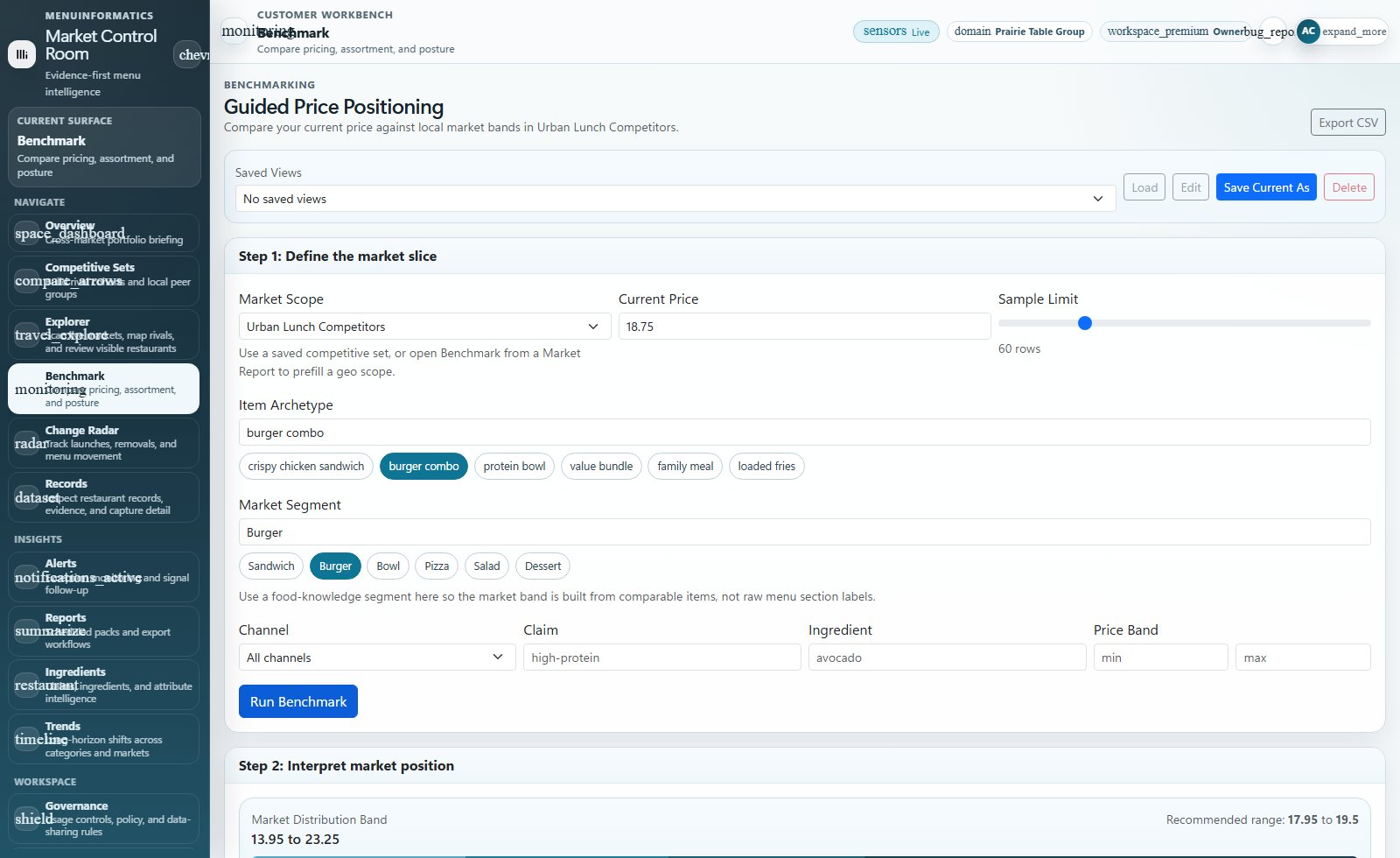
MenuInformatics menu change and pricing evidence workspace preview
Menu Change Data Readiness Path

Change feeds need source evidence, item semantics, and alert rules before teams act on them.

Menu-change buyers need to know which competitors moved, what changed, whether a change is tied to pricing or promotions, which source produced the evidence, and how noisy changes are reviewed before alerts, reports, exports, or workspace workflows start creating follow-up work.

Buyer question: Can this restaurant menu change data support alerts, reports, pricing reviews, product workflows, or competitive intelligence without hidden launch, removal, rename, offer, or source-noise risk?
Menu change data outcome: A scoped menu change data review with coverage, launch/removal mapping, price and offer context, evidence retention, governance, and subscription handoff attached.
Change Coverage Scope

Confirm which menu launches, removals, edits, and availability changes matter.

Restaurant menu change data buyers need to know whether priority markets can expose new items, removed items, renamed items, category moves, modifier changes, availability shifts, evidence timestamps, and source URLs before change feeds drive alerts, reporting, or product decisions.

  • Priority competitors, markets, menu categories, item attributes, modifiers, source pages, evidence timestamps, and unavailable-state handling named before scope is approved.
  • New items, removed items, renamed items, category changes, availability changes, description edits, modifier changes, and null-state semantics reviewed against the consuming workflow.
  • Coverage gaps and noisy source changes are separated from subscription work so the first change dataset has a defensible boundary.
Item Launch And Removal Mapping

Map launches, removals, renames, category moves, and substitutions before alerts go live.

Change data becomes useful when operators can distinguish a real item launch from a rename, a limited-time item from a permanent menu addition, and a source layout change from a customer-visible menu change.

  • Item title, category, description, modifier, size, source URL, evidence timestamp, first-seen cue, last-seen cue, and confidence fields mapped to buyer terminology.
  • Renames, category moves, duplicate item names, location-specific availability, seasonal items, limited-time items, and substitution evidence reviewed before delivery.
  • Launch and removal questions stay attached to subscription setup instead of becoming hidden onboarding work.
Price And Offer Movement Context

Separate menu changes from price changes, bundles, promotions, and source noise.

Teams watching menu changes need context for whether a menu movement is tied to price updates, limited-time offers, bundle framing, delivery-channel differences, source conflicts, or stale evidence before automated alerts create work.

  • Price-change fields, promotion fields, bundle flags, source timestamps, channel cues, confidence levels, and stale-source boundaries reviewed together.
  • Manual verification, source conflicts, marketplace-only changes, menu-board differences, app-only offers, and evidence retention expectations defined before workflows rely on the data.
  • Menu change context routes into dataset, API, report, or workspace handoff without treating public evidence as certified real-time inventory.
Change Governance And Delivery

Align change cadence, alert rules, evidence retention, and support before rollout.

Governed menu-change buyers need delivery format, refresh cadence, alert thresholds, source evidence, retention rules, false-positive review paths, license boundaries, and owner expectations before change data becomes operational.

  • Pricing, marketing, culinary, digital, operations, analytics, legal, support, and market owners identified before rollout review.
  • Snapshot, recurring file, API, report, workspace alert, retention, retry, exception, source-evidence, and support expectations reviewed together.
  • Subscription handoff preserves governance questions beside coverage, launch/removal mapping, freshness cadence, evidence retention, license scope, and next actions.
Menu Change Data Outcomes

Menu change data review turns change-radar interest into a specific subscription scope.

Change Coverage Fit

Know whether priority stores, categories, new items, removals, renames, availability shifts, modifiers, source evidence, and freshness signals are ready for dataset, API, report, or workspace use.

Mapped Change Semantics

Confirm launch, removal, rename, category movement, price movement, offer context, channel rules, source hierarchy, confidence, null handling, and manual verification boundaries before teams depend on the feed.

Governed Change Handoff

Turn menu-change interest into a subscription scope with delivery format, alert cadence, owners, evidence retention, caveat language, license limits, support paths, and next actions attached.

Use the first menu change data review to decide what should become alert, export, API, report, or workspace evidence.

The subscription setup should preserve target markets, competitor sets, store identifiers, item taxonomy, launch/removal semantics, price and offer context, source pages, freshness cadence, false-positive review paths, license limits, support paths, and commercial ownership before menu change access becomes operational.