
Restaurant Competitor Analysis

Analyze restaurant competitors before pricing, menu, and market moves become decisions.

MenuInformatics helps operators, pricing teams, marketers, franchise leaders, and executives compare competitor sets, menus, prices, offers, locations, source evidence, and movement before turning market pressure into a subscription deliverable.

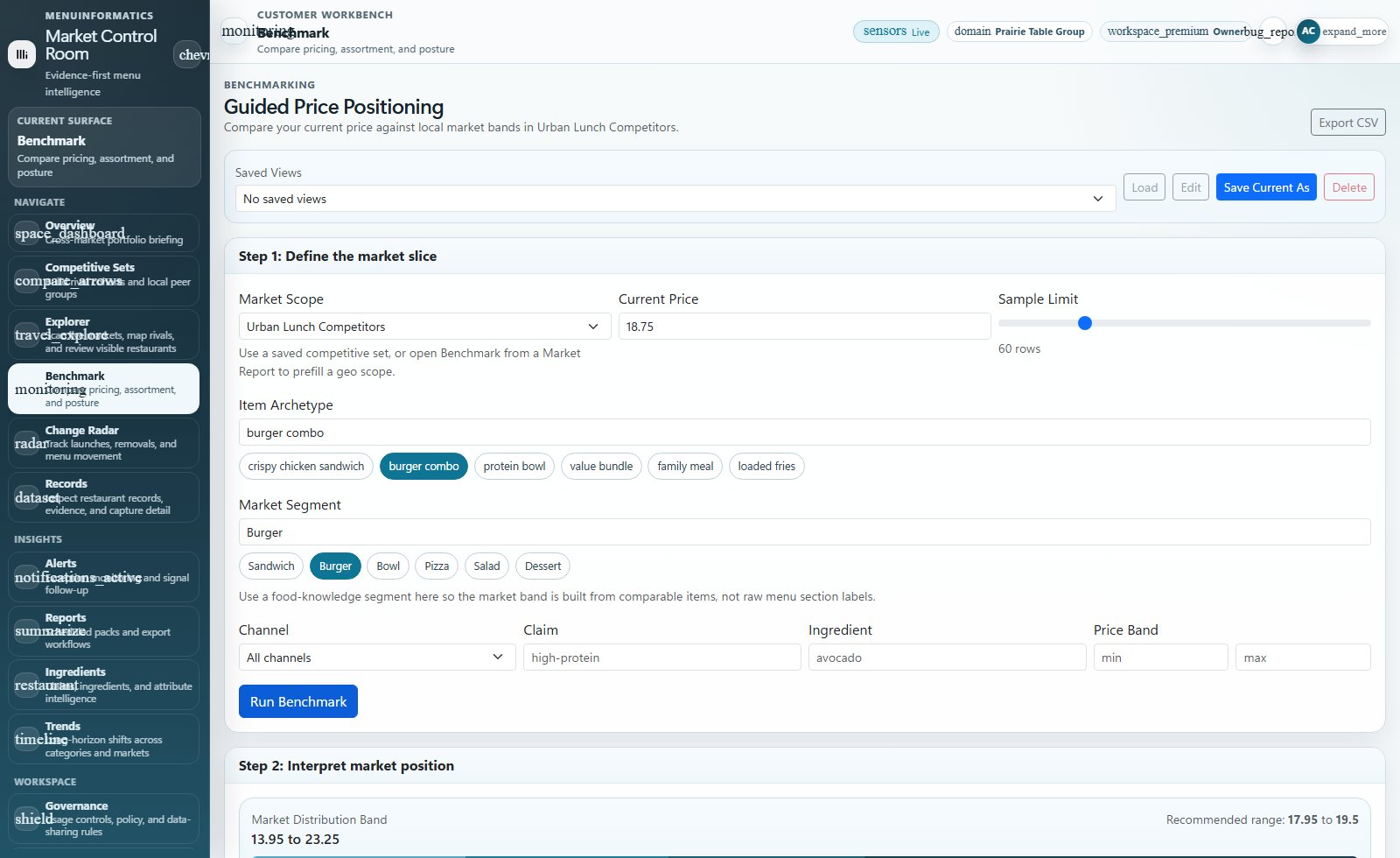
MenuInformatics restaurant competitor analysis workflow
Competitor Analysis Review Path

Competitor analysis works when comparable sets, signals, and caveats stay together.

The first review should show which competitor signals support a decision, where evidence is missing, and which output should become a recurring report, monitor, export, or API handoff.

Buyer question: Which competitor moves should your team understand before changing prices, menus, promotions, coverage, or reporting cadence?
Competitor analysis outcome: A scoped competitor analysis with comparable sets, menu and price signals, evidence caveats, output cadence, owners, and subscription handoff attached.
Analysis Scope

Name the competitor question before teams compare restaurants.

Restaurant competitor analysis should begin with the market, owned locations, competitor set, decision owner, and business question the first subscription setup needs to support.

  • Owned locations, markets, cuisine/category scope, competitor groups, channels, and decision owners named before the first analysis.
  • Public menu, price, offer, location, source, and observed-date evidence separated from buyer-owned sales, margin, traffic, and operations inputs.
  • Analysis scope connected to benchmarking, competitive pricing, market intelligence, market reports, or API delivery before kickoff.
Competitor Set Mapping

Build comparable competitor sets instead of comparing every nearby restaurant.

MenuInformatics helps buyers decide which chains, independents, franchise groups, categories, geographies, and channels belong in the competitive set before the analysis is shared.

  • Comparable restaurants grouped by geography, brand format, menu category, price tier, delivery channel, and evidence quality.
  • Known caveats captured for franchise variation, marketplace-only evidence, stale pages, missing menu coverage, and non-comparable concepts.
  • Output prepared for restaurant benchmarking, chain data, location data, market reports, or competitive intelligence handoff.
Menu And Price Signals

Review competitor menu, price, offer, and change signals in one evidence path.

A useful competitor analysis keeps price position, offer pressure, assortment depth, menu changes, promotions, and source caveats together so teams do not overread one signal.

  • Menu structure, anchor items, price ladders, bundles, modifiers, limited-time offers, dayparts, delivery variants, and observed changes reviewed together.
  • Buyer-owned economics, sales, margin, labor, and brand guardrails documented as inputs rather than inferred from public evidence.
  • Candidate follow-up routed into competitive pricing, price monitoring, menu change data, promotion data, or sample report paths.
Reporting And Handoff

Turn competitor analysis into a repeatable report, monitor, or API handoff.

The first competitor-analysis subscription setup should define output format, cadence, owners, evidence retention, follow-up questions, and how MICT routes the lead into delivery.

  • Executive summary, store-level view, benchmark set, market report, export, API, and alert needs named before rollout.
  • Cadence, source retention, evidence caveats, delivery owner, support handoff, and next question queue agreed up front.
  • MICT first-touch plan, proof path, opening question, follow-up owner, and next action prepared from the subscription signup.
Competitor Analysis Outcomes

Use the first competitor-analysis review to decide which market evidence deserves recurring delivery.

Set
Define comparable competitors by market, format, channel, category, brand type, and evidence quality.
Signals
Compare public menu, price, offer, location, change, and source evidence without hiding caveats.
Handoff
Convert analysis interest into recurring reports, monitors, exports, APIs, and accountable follow-up.