
Restaurant Data Quality

Scope restaurant data quality before it reaches reports, exports, and APIs.

MenuInformatics data quality review helps operators, pricing teams, analytics teams, procurement teams, and executives decide which restaurant records are ready for buyer workflows, which evidence needs review, and which quality gaps should become owned remediation lanes before a subscription rollout expands.

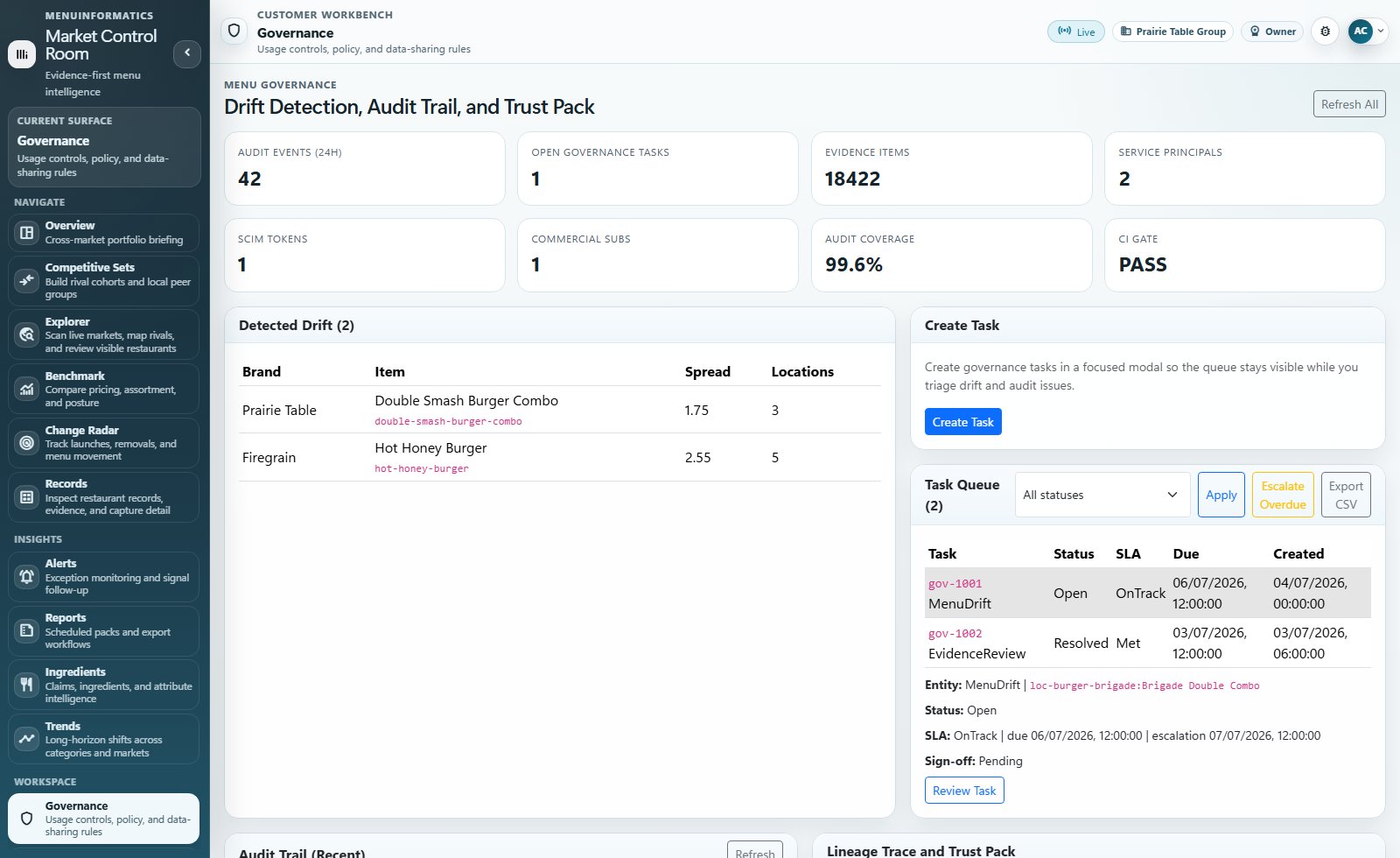
MenuInformatics restaurant data quality governance preview
Quality Review Path

Quality is a workflow, not a percentage buried in a dashboard.

A useful quality review names source evidence, freshness windows, exception lanes, owner cadence, buyer-facing impact, and delivery gates before data powers pricing, planning, market reporting, exports, or API integrations.

Buyer question: Which restaurant records are ready for use, which need remediation, and which should stay out of buyer-facing workflows?
Data quality outcome: A subscription scope with quality-ready segments, evidence-backed exceptions, freshness thresholds, owners, proof artifacts, and delivery gates attached.
Coverage And Freshness

Separate useful restaurant coverage from stale or incomplete data.

A data quality review should show which markets, brands, sources, and fields are current enough for the decision and which gaps need remediation before recurring delivery.

  • Priority cities, regions, chains, independents, and competitor sets reviewed against freshness, source, and field completeness expectations.
  • Menu, price, hours, location, promotion, delivery, dietary, allergen, nutrition, and ingredient fields separated by readiness level.
  • The subscription setup names which rows can support decisions now, which rows need refresh, and which rows should stay out of buyer-facing workflows.
Source Evidence

Attach source pages, timestamps, and caveats to every quality claim.

Restaurant data quality work is more credible when buyers can see evidence URLs, capture windows, source conflicts, provider-only gaps, and review notes instead of a bare completeness percentage.

  • First-party sites, menus, ordering surfaces, location pages, marketplace evidence, and source-check status reviewed before scoring quality.
  • Evidence windows, stale-source buckets, source conflicts, provider-only rows, and unsupported records are visible in the review.
  • Quality output preserves source caveats so operators can defend or reject data before it moves into reporting, exports, or API feeds.
Exception Workflow

Turn quality gaps into owned review queues instead of silent failures.

Data quality improves faster when stale rows, missing prices, duplicate identities, provider-only records, unmapped locations, and manual-review rows become visible work queues with owners and proof requirements.

  • Duplicate identity, stale freshness, missing price, missing menu, source-blocked, provider-only, and manual-review lanes named before rollout.
  • Each exception lane has an owner, escalation path, proof artifact, customer-visible impact, and decision on retry, hide, repair, or manual review.
  • The subscription rollout turns quality exceptions into a governed operating cadence rather than an untracked cleanup backlog.
Delivery Governance

Define the quality bar before data reaches reports, exports, and APIs.

Teams using restaurant data in planning, pricing, analytics, procurement, or executive reporting need quality gates, freshness thresholds, evidence retention, licensing boundaries, and support paths before delivery expands.

  • Freshness thresholds, source evidence, exception ownership, audit artifacts, licensing boundaries, and review cadence agreed before recurring delivery.
  • Dashboard, report, export, API, saved-view, and support handoffs use the same quality vocabulary and acceptance bar.
  • The launch plan states what is ready for buyer use, what is advisory only, and what remains blocked until quality evidence improves.
Data Quality Outcomes

Data quality review turns trust concerns into an operating plan.

Quality-Scored Scope

Know which markets, chains, sources, and fields are decision-ready before a subscription rollout starts.

Evidence-Backed Exceptions

Turn stale, duplicate, provider-only, unmapped, or manual-review rows into visible work queues with proof requirements.

Governed Delivery Bar

Set the freshness, evidence, support, export, report, and API quality gates that protect buyer workflows.

Use the first data quality review to set the bar for every customer-facing workflow.

The subscription setup should preserve source evidence, stale-row classification, exception ownership, freshness thresholds, review artifacts, support paths, and delivery gates before quality-sensitive data reaches dashboards, scheduled reports, exports, or APIs.