
Restaurant Menu Data Provider

Evaluate a restaurant menu data provider before your team depends on coverage, feeds, or reports.

MenuInformatics provider review helps restaurant brands, analytics teams, procurement owners, pricing teams, product teams, and operators compare coverage, source evidence, delivery options, quality caveats, governance, and support expectations before a restaurant menu data provider becomes part of recurring work.

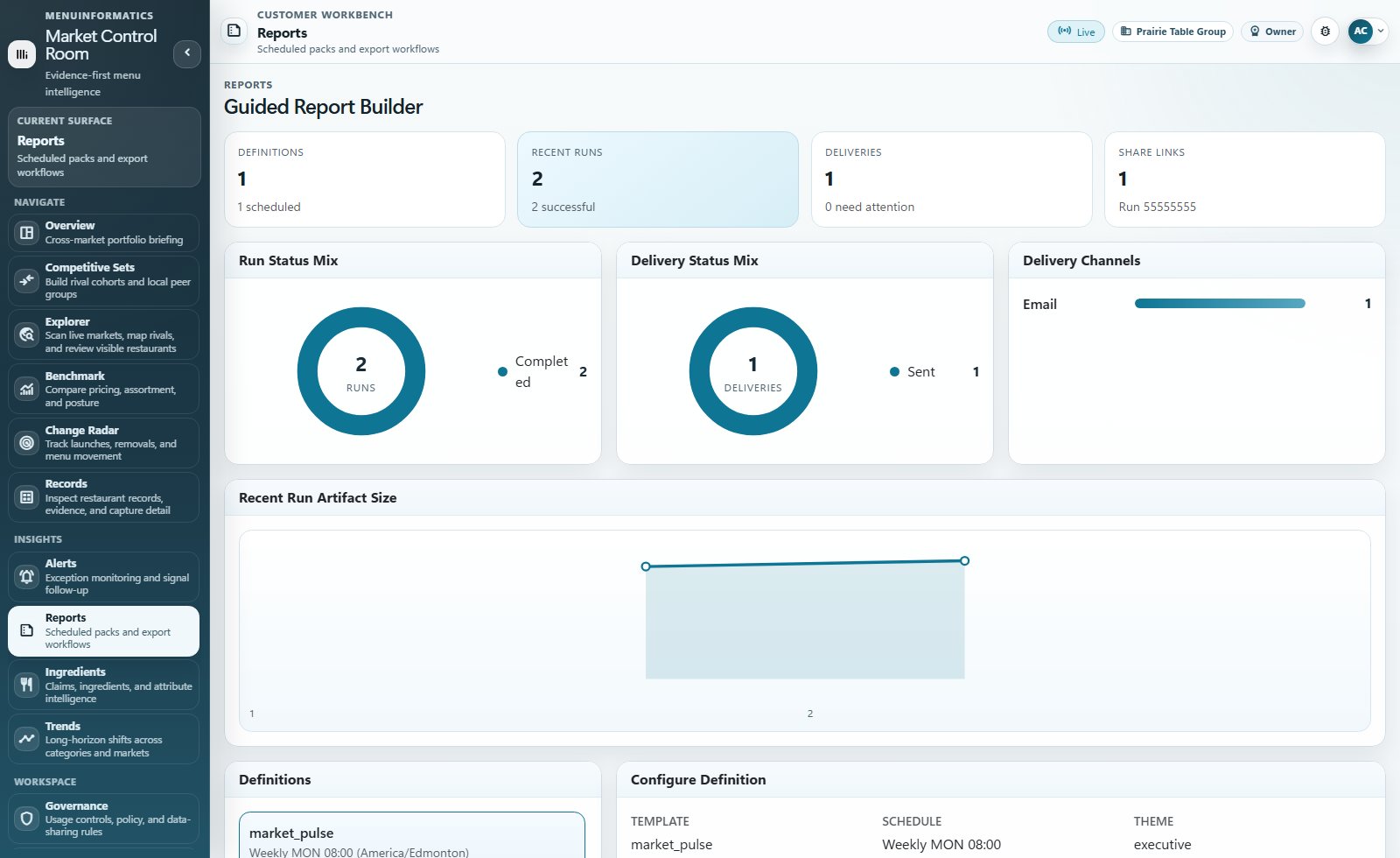
MenuInformatics restaurant menu data provider report and export preview
Provider Evaluation Path

Provider review should connect coverage, source evidence, data shape, and commercial handoff.

Buyers comparing menu data providers need to know what is covered, how the records are sourced, how freshness and exceptions are handled, and whether delivery should be dataset, API, export, report, or workspace workflow before the provider becomes operational.

Buyer question: Can this provider support our restaurant data workflow without hidden coverage, evidence, licensing, or delivery risk?
Menu data provider outcome: A subscription provider review with coverage, data shape, quality evidence, delivery cadence, license boundaries, owners, and next actions attached.
Provider Fit And Coverage

Confirm whether the provider covers the restaurants, markets, chains, and fields your workflow needs.

Restaurant menu data provider evaluation should start with the exact markets, brands, menu surfaces, source evidence, and freshness expectations a buyer needs before procurement or implementation starts.

  • Priority countries, regions, chains, independent operators, locations, menu pages, categories, prices, offers, claims, and evidence fields reviewed before fit is accepted.
  • Coverage gaps, source-only caveats, provider-host records, duplicate identities, and unmapped locations separated from ready-for-use records.
  • The first review names what can support a subscription setup now and what remains source remediation or advisory coverage.
Dataset And API Delivery

Decide whether provider access should be a dataset, API feed, report, export, or workspace workflow.

The right provider handoff depends on delivery shape, cadence, schema, taxonomy, evidence links, license boundaries, owners, and how downstream teams will consume the data.

  • Snapshot datasets, recurring exports, menu APIs, pricing APIs, analytics feeds, market reports, and workspace views mapped to specific buyer teams.
  • Schema, stable identifiers, menu taxonomy, null handling, freshness markers, source evidence, and delivery cadence reviewed before integration.
  • Commercial handoff keeps data-shape questions tied to subscription setup instead of hiding them in onboarding.
Source Evidence And Quality

Evaluate source evidence, freshness, and exception handling before provider data is trusted.

A menu data provider should expose how records were sourced, when evidence was captured, which fields are fresh, and which exceptions still need review before teams make decisions from the data.

  • Source pages, capture timestamps, menu evidence, price evidence, provider-only caveats, and stale-record thresholds visible before delivery.
  • Duplicate, stale, missing-price, missing-menu, provider-only, unmapped, and manual-review records routed into exception lanes.
  • Reports, exports, APIs, and dashboards use the same evidence vocabulary so buyer teams understand readiness and caveats.
Commercial Governance

Align provider evaluation with procurement, legal, support, and operating owners.

Provider evaluation becomes durable when license boundaries, data retention, audit needs, source disclosure, security review, support paths, and subscription ownership are agreed before rollout.

  • Procurement, legal, analytics, pricing, operations, security, billing, and executive owners named before provider review closes.
  • License, redistribution, retention, crawler disclosure, support, freshness, exception, and escalation expectations reviewed together.
  • The subscription setup states which provider outputs are production-ready, advisory, recurring, or blocked pending remediation.
Data Provider Outcomes

Provider evaluation turns vendor interest into a specific subscription scope.

Provider Fit

Know whether the restaurant menu data provider covers the exact brands, markets, fields, sources, and freshness windows that matter.

Delivery Path

Choose dataset, API, export, report, or workspace delivery with schema, cadence, license, and owners already named.

Evidence Review

Keep source evidence, caveats, exception lanes, quality notes, and support expectations visible before teams depend on the data.

Use the first provider review to decide what should be data, API, report, or supported workflow.

The subscription setup should preserve provider fit, markets, source evidence, schema, delivery cadence, license boundaries, quality exceptions, support ownership, and commercial next steps before restaurant menu data becomes a recurring dependency.