
Restaurant Web Scraping

Review restaurant web scraping coverage before public web evidence becomes a data dependency.

MenuInformatics helps restaurant brands, analytics teams, pricing teams, procurement owners, and operators scope public restaurant web evidence collection with source visibility, crawler disclosure, freshness expectations, exception handling, and delivery governance before a subscription rollout expands.

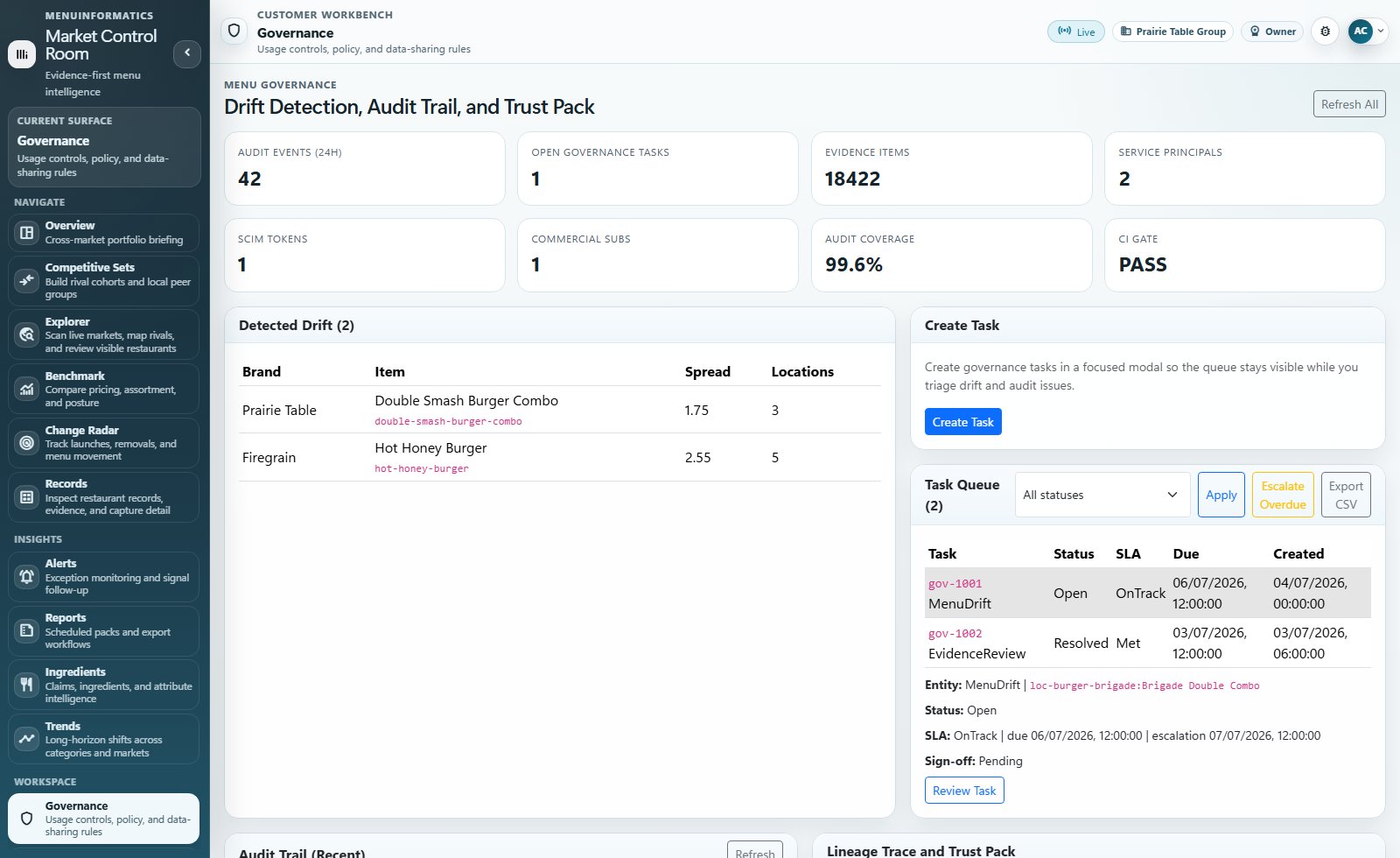
MenuInformatics restaurant web scraping governance and source review workflow
Public Web Evidence Review

Restaurant web scraping should preserve source evidence, crawler controls, and buyer handoff together.

Buyers comparing restaurant web scraping options need to understand where evidence comes from, how direct website collection identifies itself, which fields are fresh, and how delivery will handle blocked, provider-only, stale, or manual-review records.

Buyer question: Can public restaurant web evidence support our workflow without hidden source, crawler, freshness, or governance risk?
Web evidence outcome: A subscription review with source scope, crawler disclosure, field readiness, freshness rules, delivery path, and support owners attached.
Public Web Coverage

Review whether public restaurant web evidence covers the markets, brands, and menu surfaces your team needs.

Restaurant web scraping evaluation should start with the exact public sources, markets, chains, locations, menus, prices, hours, offers, and evidence fields a buyer needs before the data is used downstream.

  • Priority countries, cities, chains, independent restaurants, menu pages, ordering surfaces, and location pages named before coverage is accepted.
  • Provider-hosted menus, direct restaurant websites, source-only caveats, missing fields, and blocked public paths separated into evidence lanes.
  • The review states what can support a subscription setup now and what remains source remediation, provider strategy, or manual review.
Crawler Disclosure And Controls

Keep collection tied to transparent crawler identity, operator contact paths, and robots-aware behavior.

Public web evidence collection needs a clear crawler disclosure, support path, host-aware pacing, opt-out review handling, and no dependence on private or authenticated surfaces.

  • Crawler identity, Web Bot Auth support, support intake, robots behavior, rate limits, and suppression review paths stay visible to buyers and site operators.
  • Direct website collection stays focused on public restaurant evidence and avoids private accounts, authenticated sessions, and payment flows.
  • Provider integration caveats, CDN blocks, opt-out requests, and legal/security review questions become owned handoff items instead of hidden risks.
Evidence To Dataset Or API

Decide which web evidence should become dataset rows, API fields, market reports, exports, or workspace tasks.

Web scraping output is only useful when source evidence, capture timestamps, schema, taxonomy, null handling, freshness markers, and delivery cadence are agreed before integration.

  • Menu items, categories, prices, promotions, hours, delivery signals, location fields, and source URLs mapped to dataset/API/report/workspace needs.
  • Freshness thresholds, recrawl cadence, field confidence, evidence links, and exception ownership included before recurring delivery starts.
  • Delivery review keeps source limits and advisory caveats attached to the subscription setup buyers and operators will use.
Governance And Support

Turn public web collection into a governed subscription setup instead of a loose scraping project.

Governed web evidence review aligns procurement, security, legal, operations, support, source remediation, reporting, and rollout owners before restaurant web scraping becomes recurring infrastructure.

  • Procurement, legal, security, analytics, pricing, operations, support, and executive owners named before the review closes.
  • License boundaries, source disclosure, retention, escalation, opt-out handling, delivery SLAs, and support ownership reviewed together.
  • The subscription setup names which outputs are production-ready, advisory, blocked by source behavior, or pending remediation.
Web Evidence Outcomes

Web scraping review turns public source interest into a governed subscription scope.

Coverage Fit

Know which public restaurant web sources can support your markets, chains, menus, locations, prices, hours, offers, and evidence fields.

Source Controls

Keep crawler disclosure, operator contact paths, robots-aware pacing, opt-out review, and provider-source caveats attached to the workflow.

Delivery Decision

Choose dataset, API, report, export, or workspace delivery with source evidence, freshness, caveats, and owners already named.

Use the first review to decide which public web evidence is ready for data, API, report, or workspace delivery.

The subscription setup should preserve source scope, crawler disclosure, freshness thresholds, field confidence, exception handling, delivery cadence, support ownership, and governance boundaries before restaurant web scraping becomes a recurring dependency.