
Restaurant Chain Data

Scope restaurant chain data before brand rollups drive pricing, expansion, or reporting decisions.

MenuInformatics chain data review helps pricing teams, franchise teams, market analysts, procurement teams, operations leaders, and executives validate chain footprint, brand identity, menu and price movement, source evidence, quality caveats, and delivery governance before recurring chain data reaches buyer workflows.

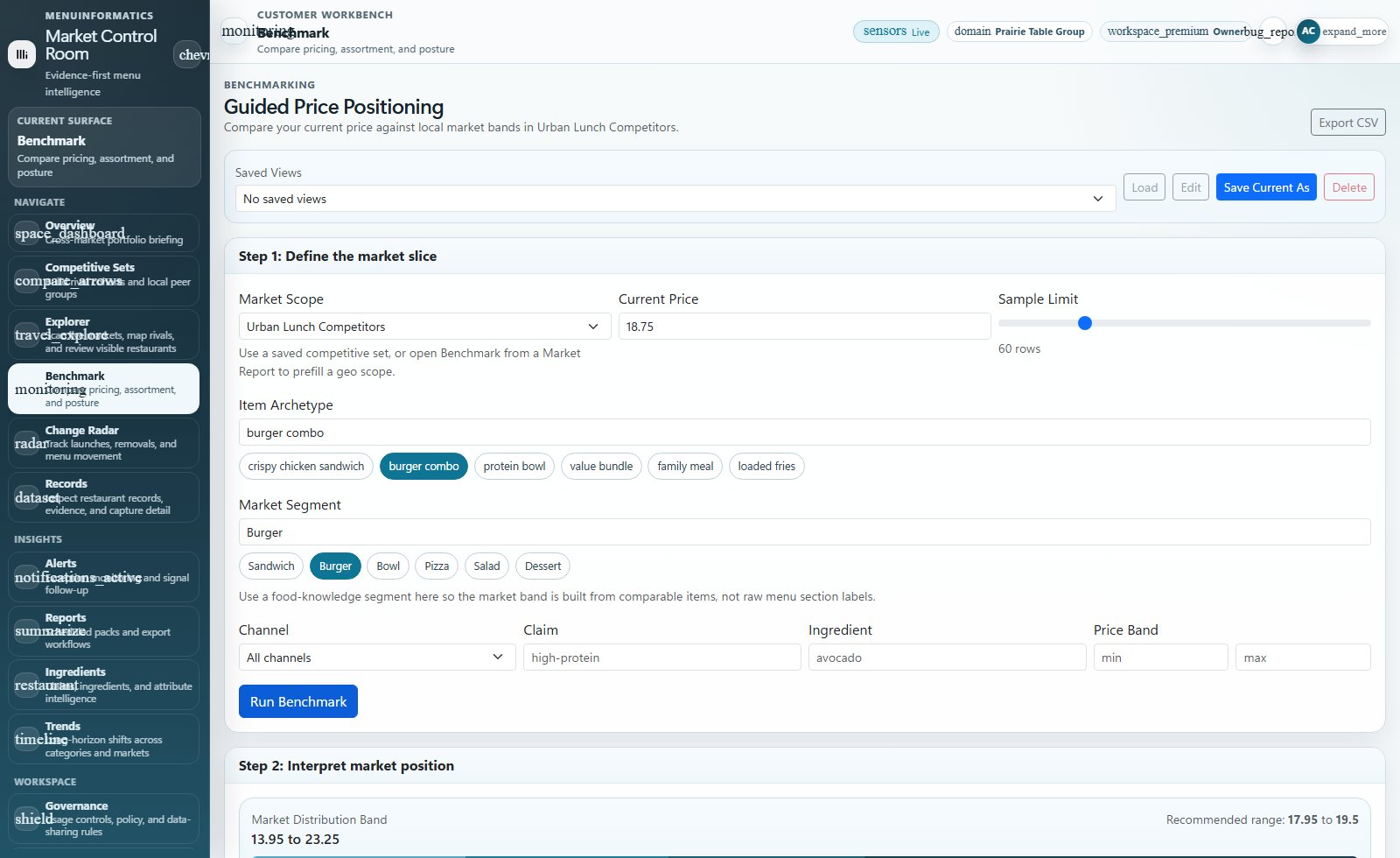
MenuInformatics restaurant chain benchmark preview
Chain Data Review Path

Chain data is only useful when brand rollups stay connected to stores, sources, menus, and caveats.

A buyer evaluating chain data needs to know which brands are covered, where the locations came from, how aliases and franchise groups are handled, which menu and price signals roll up cleanly, and what evidence or freshness exceptions still need review before delivery expands.

Buyer question: Can this chain view support brand, market, and franchise decisions without hiding source quality or local exceptions?
Chain data outcome: A subscription scope with target chains, location footprint, brand mapping, rollup rules, evidence windows, exception lanes, delivery paths, and owners attached.
Chain Footprint Scope

Map the restaurant chains, regions, and store groups that matter to the buying decision.

Restaurant chain data should start with the brands, banners, franchise groups, markets, and competitor sets a team actually needs to monitor before a subscription setup expands.

  • Priority chains, banners, aliases, regions, trade areas, franchise groups, and local competitors reviewed before delivery scope is set.
  • Location counts, market presence, source evidence, chain aliases, duplicate risks, and missing-store gaps are visible in the review.
  • The subscription setup separates brands with enough evidence for recurring use from chains that need source remediation or manual review first.
Brand And Franchise Mapping

Keep brand, franchise, and local-market identities from collapsing into one noisy rollup.

Chain analysis becomes credible when parent brands, banners, regional operators, franchise locations, and local aliases stay traceable instead of being flattened into a single name.

  • Brand aliases, parent-child relationships, market-specific naming, franchise clusters, and duplicate identity risks reviewed before reporting.
  • Chain rollups preserve source pages, location evidence, menu source status, and review notes so teams can defend the brand view.
  • Buyer-facing outputs call out where identity confidence is high, where aliases need review, and where records should stay advisory.
Menu Price And Promotion Rollups

Compare chain menus, price ladders, offers, and changes without losing local detail.

Restaurant chain data is most valuable when brand-level rollups stay connected to menu items, prices, promotions, delivery signals, locations, and market-level caveats.

  • Category, item, modifier, price, offer, bundle, delivery, location, and market signals reviewed together before summaries are used.
  • Rollups link back to source evidence and local exceptions so pricing teams can see whether movement is national, regional, or store-specific.
  • Chain dashboards, exports, reports, and API feeds share the same scope, caveats, freshness expectations, and evidence vocabulary.
Governed Chain Data Delivery

Turn chain coverage into a delivery workflow with ownership, evidence, and refresh rules.

Teams using chain data in pricing, market reporting, expansion, procurement, franchise, or executive workflows need a governed handoff before recurring delivery starts.

  • Freshness thresholds, evidence retention, source exception lanes, identity review ownership, and support paths agreed before rollout.
  • Saved views, scheduled reports, market briefs, exports, API feeds, and support workflows use the same chain scope and caveat model.
  • The subscription setup states what is ready for buyer use, what remains advisory, and what needs remediation before chain data becomes recurring delivery.
Chain Data Outcomes

Chain data review turns brand interest into a specific delivery scope.

Chain-Ready Scope

Name the exact brands, banners, regions, source surfaces, and location groups that can support a subscription rollout.

Defensible Rollups

Connect brand-level summaries to locations, menus, prices, offers, source evidence, and exception notes.

Governed Delivery

Move chain data into reports, exports, APIs, and workspace views with refresh rules and ownership already defined.

Use the first chain data review to decide which brand rollups are ready for recurring delivery.

The subscription setup should preserve chain scope, source evidence, brand mapping, market rollups, freshness expectations, exception ownership, support paths, report and export requirements, API boundaries, and commercial handoff before chain data becomes a dashboard, market report, file, or feed.