
Restaurant Franchise Analytics

Scope franchise analytics before territory, operator, or growth decisions depend on it.

MenuInformatics helps franchise operators, regional brands, and enterprise restaurant teams turn public restaurant evidence into franchise footprint scope, operator scorecards, territory review, and governed reporting before a subscription rollout expands.

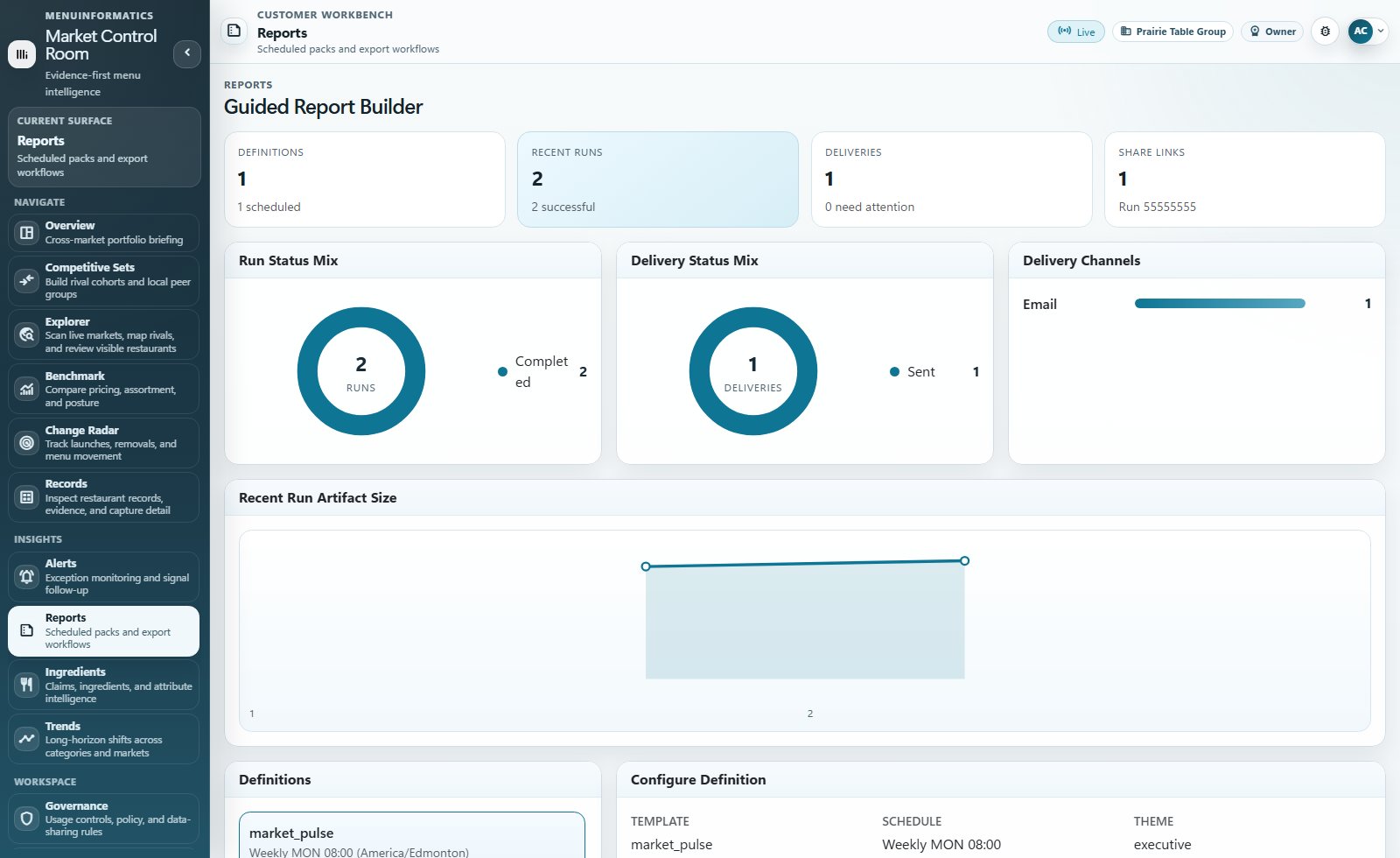
MenuInformatics franchise analytics reporting workflow
Franchise Analytics Review

Franchise analytics works when location hierarchy, market context, and operator follow-up stay connected.

Buyers evaluating franchise analytics need to know which locations are owned, franchised, pending, comparable, and competitor-owned before scorecards, reports, or APIs become recurring operating infrastructure.

Buyer question: Which franchise territory, operator scorecard, or growth decision should the first subscription setup make easier to defend?
Franchise analytics outcome: A subscription review with franchise footprint, operator scorecard signals, territory context, source evidence, and delivery governance attached.
Franchise Footprint Scope

Define brand, franchisee, territory, and competitor coverage before expansion or operator reviews depend on it.

Franchise analytics works when corporate, franchise, and regional teams agree which locations, banners, trade areas, and rivals belong in the first review.

  • Owned, franchised, pending, and competitor locations separated before scorecards or reports are accepted.
  • Territory, DMA, province, city, and trade-area logic named with the franchise stakeholders who will use it.
  • Known public-source caveats, duplicate brand aliases, and franchise banner exceptions captured up front.
Operator Scorecard Signals

Connect local menu, price, offer, hours, and claim movement to franchise operator conversations.

Franchise teams need a way to compare local execution against nearby competitors and sister locations without rebuilding spreadsheets by region.

  • Menu depth, price position, offer movement, hours evidence, and local market comparisons mapped per location.
  • Scorecard sections separated for operator coaching, pricing review, marketing, procurement, and support follow-up.
  • Exceptions routed to data-quality and source-evidence review instead of silently entering executive reporting.
Territory And Growth Review

Use current restaurant evidence to review territory opportunity, market entry, and competitive pressure.

Expansion and franchise development teams need local restaurant density, chain presence, offer pressure, and menu positioning in the same review path.

  • Candidate markets, nearby competitors, category gaps, chain density, and public evidence expectations aligned.
  • Market-entry questions tied to competitor watch, chain data, location data, market reports, and data API handoff.
  • Source confidence and freshness caveats visible before growth assumptions become planning inputs.
Reporting And Governance

Turn franchise analytics into a governed report, workspace, export, or API handoff for recurring review.

Franchise analytics becomes operational only when cadence, ownership, evidence, access, and escalation are agreed before the subscription rollout expands.

  • Executive report, franchisee scorecard, workspace, export, and API delivery expectations scoped before rollout.
  • Taxonomy, source evidence, location hierarchy, freshness, support, and audit ownership attached to the subscription setup.
  • Follow-up route into market reports, chain data, data-quality review, and Commercial Leads proof path agreed up front.
Franchise Analytics Outcomes

Franchise analytics should connect territory planning, operator review, and governed delivery.

Franchise Footprint
Brand, franchise, territory, and competitor scope stay attached to each review instead of living in separate planning files.
Operator Review
Location-level menu, price, offer, and hours signals can support coaching, support, and pricing conversations with evidence visible.
Governed Delivery
The same scoped view can feed scorecards, market reports, datasets, APIs, and customer-success follow-up without reworking the buyer story.