
Restaurant Menu Optimization

Scope restaurant menu optimization around evidence your team can defend.

MenuInformatics helps restaurant teams turn public menu, price, bundle, offer, category, competitor, and change signals into a governed optimization review while keeping internal sales, cost, labor, and margin assumptions explicit.

MenuInformatics restaurant menu optimization workflow
Optimization Review Path

Menu optimization is safer when public market evidence and buyer-owned economics stay separate.

The first review should identify which menu changes deserve testing, which need better evidence, and which require internal POS, margin, inventory, or operations inputs before action.

Buyer question: Which optimization candidate needs market evidence before your team changes the menu?
Optimization outcome: A scoped review with candidate actions, evidence boundaries, monitoring cadence, and subscription handoff attached.
Optimization Objective Design

Pick the menu decision the first optimization review must make easier to defend.

Menu optimization work should start with one named outcome: price review, category focus, assortment cleanup, bundle framing, offer response, or reporting cadence.

  • Decision owners, priority categories, target markets, competitor sets, and acceptable source evidence defined before optimization work starts.
  • Observable public menu, price, offer, and category signals separated from buyer-owned sales, COGS, labor, traffic, and margin assumptions.
  • Optimization scope tied to benchmark, menu-analysis, pricing-intelligence, forecast, report, or API handoff before recommendations circulate.
Price Bundle And Offer Signals

Review prices, bundles, modifiers, and offers before changing menu economics.

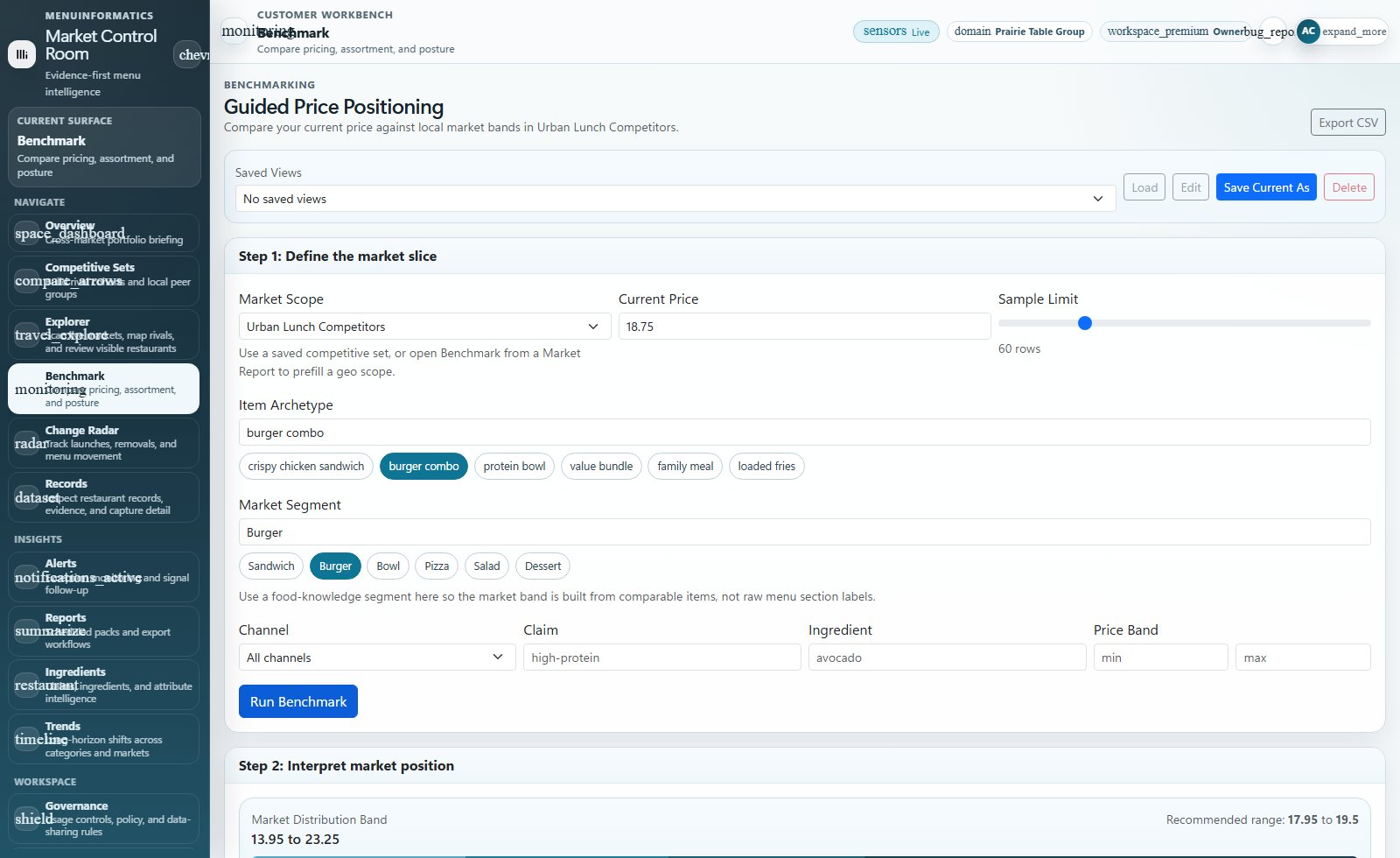
MenuInformatics can expose price ladders, bundle framing, modifier pressure, competitor offers, and menu movement so teams know which optimization candidates deserve deeper review.

  • Anchor items, size ladders, combo framing, limited-time offers, modifiers, and local competitor price bands reviewed together.
  • Recommendation candidates tagged with evidence quality, source caveats, missing prices, and market comparability notes.
  • Price monitoring, promotion data, menu-change data, and competitive intelligence paths linked when movement needs recurring review.
Category And Assortment Tests

Use menu evidence to choose which categories, items, claims, and gaps deserve experiments.

Optimization gets more practical when category balance, claim density, item depth, dietary signals, limited-time launches, and competitor gaps are reviewed before teams choose test candidates.

  • Category share, item counts, claim language, dietary positioning, launch timing, and missing competitor equivalents reviewed before tests are named.
  • Menu engineering, menu analysis, trends, forecasting, nutrition, allergen, and ingredient evidence paths kept available for specialized follow-up.
  • Internal sales or margin data accepted as buyer-supplied inputs, not inferred from public market evidence.
Rollout And Measurement Handoff

Turn optimization interest into a governed subscription setup with cadence, owners, and proof boundaries.

A menu optimization subscription setup should define what public evidence will be monitored, what internal metrics the buyer will add, and how changes move into reports, exports, or customer workflows.

  • Pricing, culinary, marketing, analytics, franchise, operations, finance, and executive owners named before rollout.
  • Experiment cadence, source retention, caveats, report delivery, export format, API needs, and support handoff reviewed together.
  • MICT first-touch proof path, follow-up owner, buyer signal, and next action prepared from the subscription signup.
Menu Optimization Outcomes

Use the first optimization review to choose candidate actions, caveats, and handoff paths.

Objective
Start with the exact menu decision the subscription setup should support, not a broad optimization promise.
Candidates
Rank price, bundle, category, assortment, offer, or claim candidates by visible evidence and caveats.
Handoff
Convert the review into monitored reports, experiments, exports, or API delivery with owners attached.