
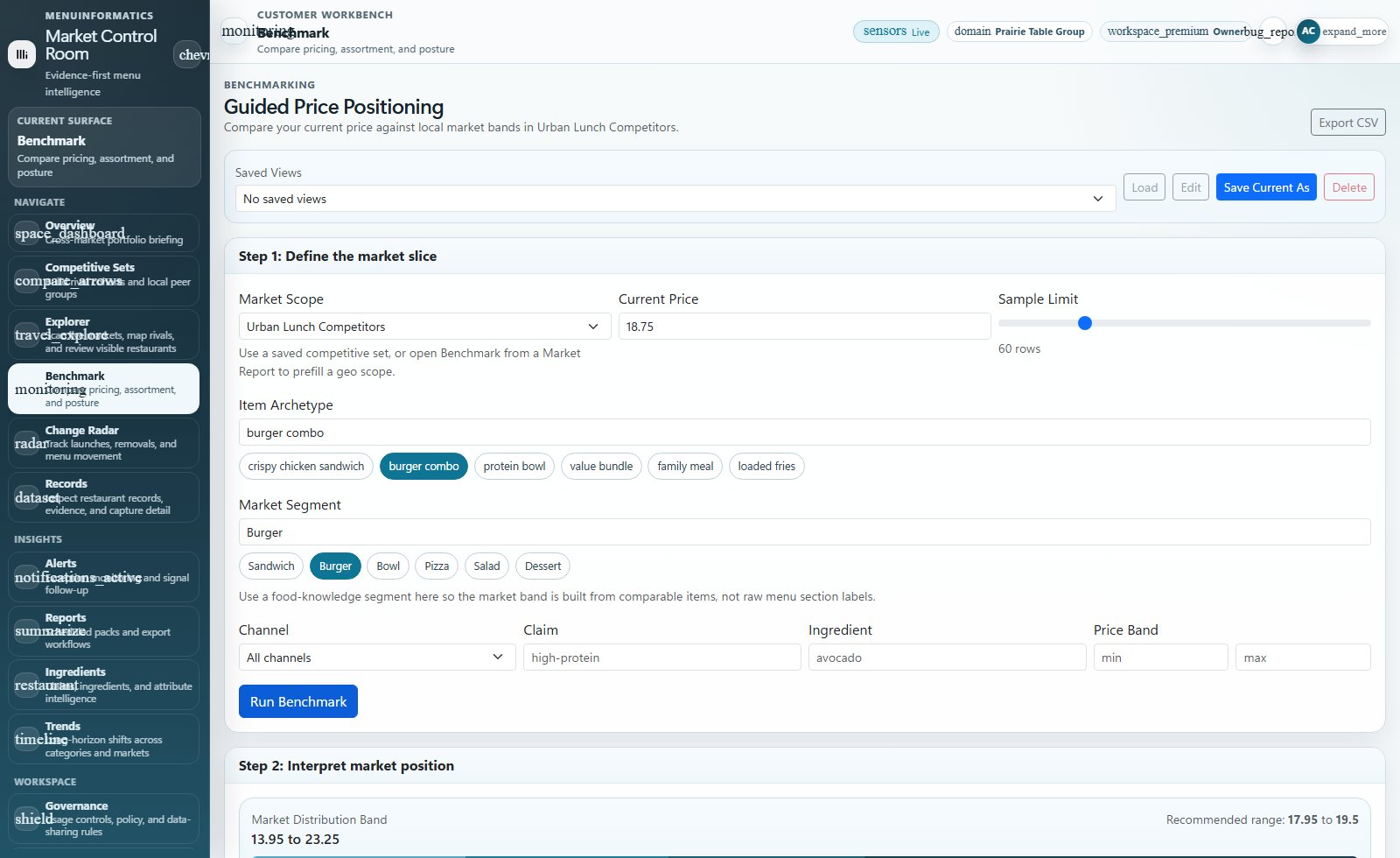
Restaurant Menu Pricing Strategy

Set restaurant menu pricing strategy before price changes turn into isolated item debates.

MenuInformatics helps restaurant executives, pricing teams, finance teams, franchise leaders, and operators connect menu prices, offers, bundles, competitors, channels, and market movement into a governed pricing strategy review with clear proof boundaries.

MenuInformatics restaurant menu pricing strategy workflow
Pricing Strategy Review Path

Pricing strategy needs market evidence and internal economics to stay in their own lanes.

The first review should show what public menu and competitor evidence can support, which buyer-owned economics are required, and which pricing decision should become the subscription rollout.

Buyer question: Which pricing strategy decision needs defensible market evidence before your team changes prices?
Pricing strategy outcome: A scoped price architecture and rollout review with evidence boundaries, owners, cadence, and subscription handoff attached.
Pricing Strategy Scope

Define the pricing strategy decision before item-level changes multiply.

Menu pricing strategy should start with the market, category role, competitor set, price architecture, and internal economics the first review must respect.

  • Target markets, restaurant formats, category roles, priority items, comparable competitors, owners, and price-change windows named before the strategy review starts.
  • Public market price evidence separated from buyer-owned sales, traffic, margin, product cost, labor, inventory, and brand guardrails.
  • Pricing strategy scope connected to benchmarking, pricing intelligence, menu strategy, menu optimization, reports, or API delivery before kickoff.
Price Architecture And Bands

Turn visible menu prices into a defendable price architecture review.

MenuInformatics helps buyers review price bands, ladders, entry points, premium anchors, modifier spread, and comparable sets before teams approve changes.

  • Menu categories, hero items, entry items, premium items, family meals, sides, drinks, modifiers, and delivery variants grouped into price ladders.
  • Competitor prices and local market movement tagged by source, freshness, comparability caveat, geography, and channel before recommendations are drafted.
  • Architecture review prepared for pricing intelligence, benchmarking, market report, menu engineering, or optimization handoff.
Offer And Bundle Strategy

Review offers and bundles as pricing strategy, not only campaign activity.

Restaurant pricing strategy gets stronger when bundles, promos, value meals, limited-time offers, modifiers, and delivery fees are reviewed against the same market evidence.

  • Offers, bundles, promos, value meals, modifiers, add-ons, delivery fees, and channel-specific prices reviewed together instead of as isolated tactics.
  • Buyer-owned promotion economics, inventory limits, franchise rules, and margin targets documented as assumptions, not inferred from public menus.
  • Monitoring cadence, source retention, and exception handling identified before an offer or bundle subscription setup is approved.
Rollout Measurement Handoff

Move pricing strategy into a governed subscription setup with owners, evidence, and follow-up.

The first pricing strategy subscription setup should define what will be proved, which teams own rollout decisions, how frequently evidence updates, and what success means before price changes ship.

  • Executive, pricing, finance, analytics, marketing, culinary, franchise, operations, procurement, and customer-success owners named before subscription setup kickoff.
  • Success criteria, caveats, evidence retention, report cadence, exports, API access, support handoff, and follow-up workflow reviewed together.
  • MICT first-touch plan, proof path, opening question, follow-up owner, and next action prepared from the subscription signup.
Menu Pricing Strategy Outcomes

Use the first pricing strategy review to choose what should be priced, monitored, reported, or handed off.

Pricing Focus
Choose the price architecture, market, item set, bundle, or rollout decision the first subscription setup should prove.
Evidence Boundaries
Keep public menu and competitor evidence separate from buyer-owned economics before decisions are made.
Rollout Handoff
Convert pricing strategy interest into governed monitoring, reports, exports, API delivery, and follow-up ownership.